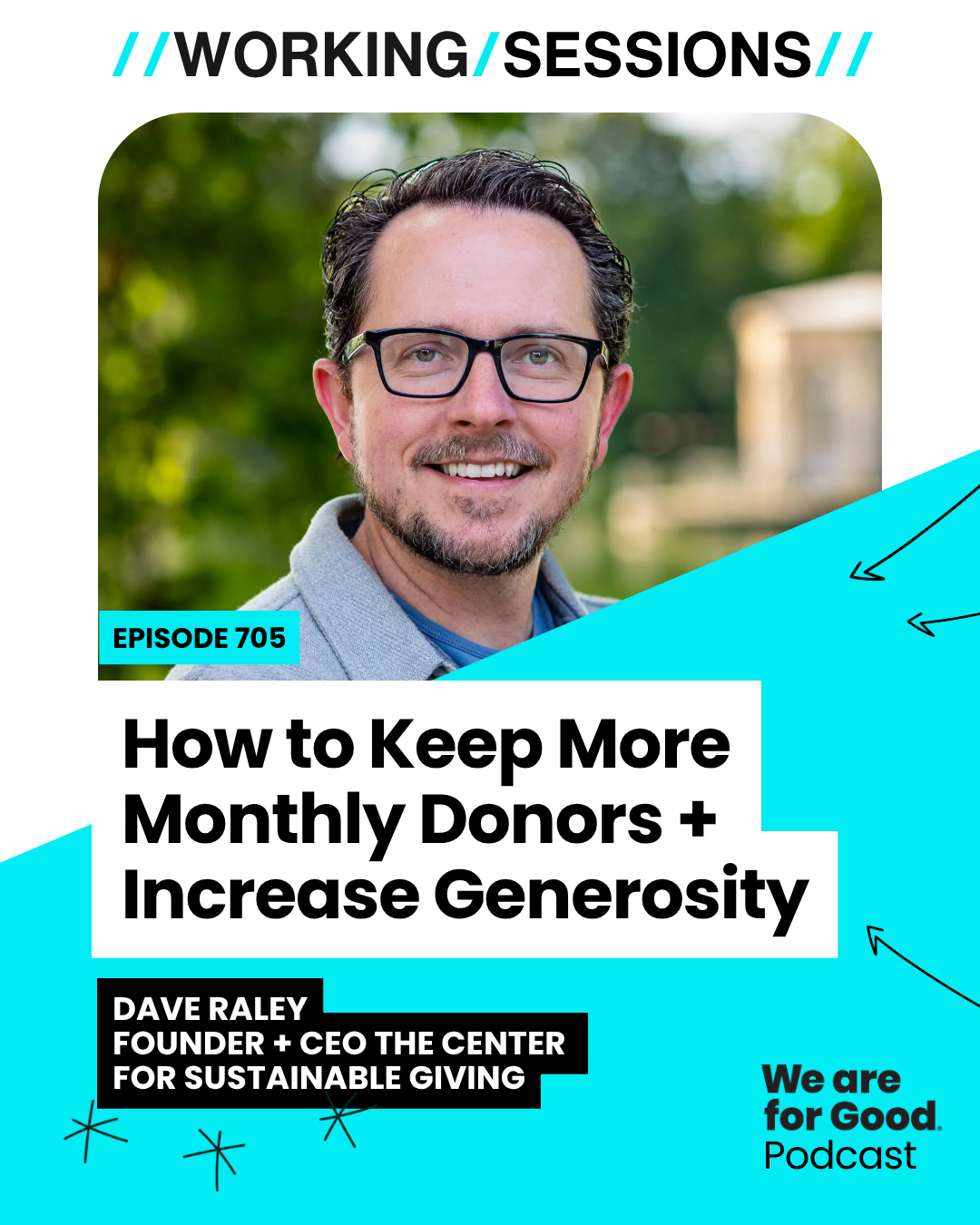
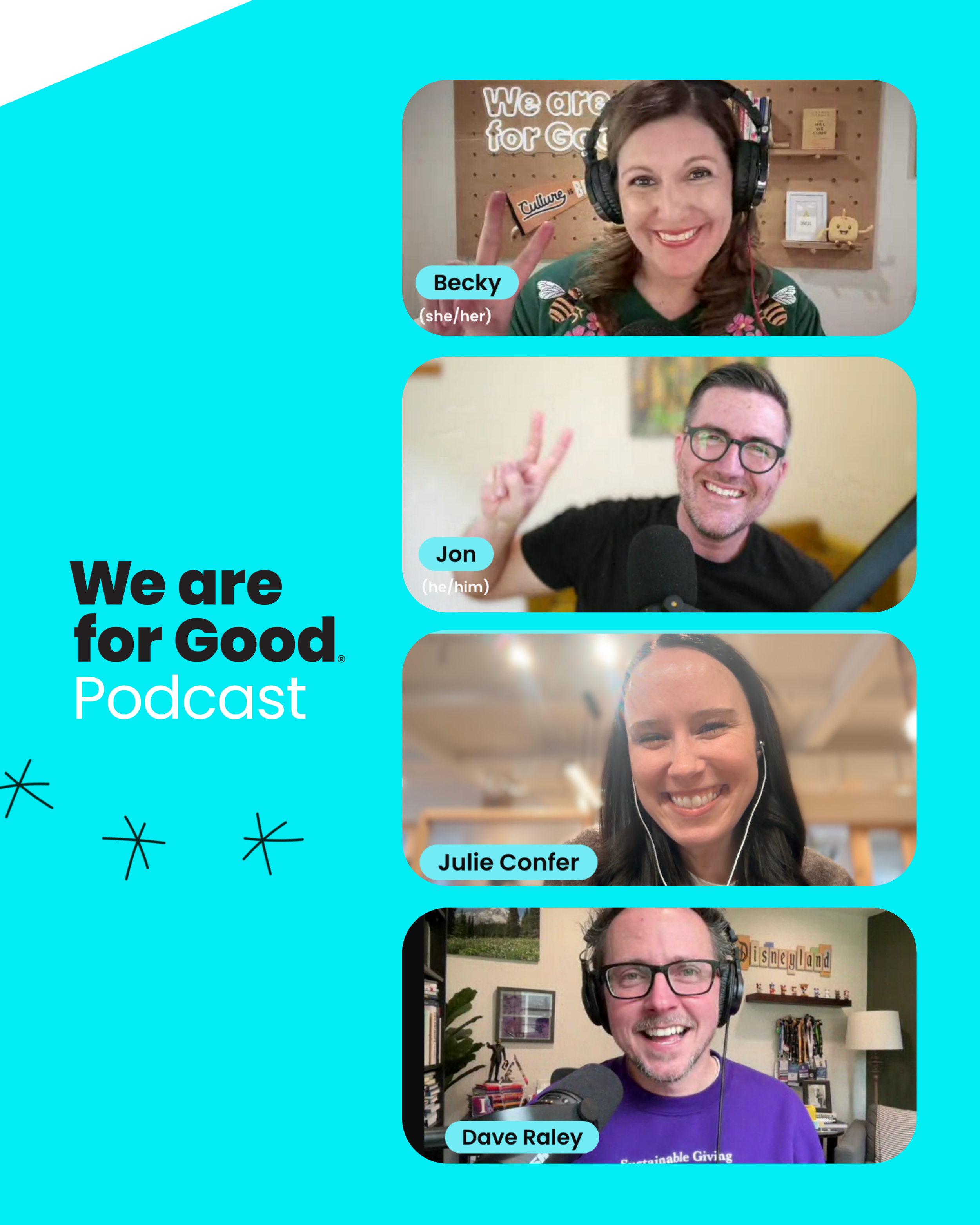
705. Working Session: How to Keep More Monthly Donors + Increase Generosity - Dave Raley
Listen to this episode
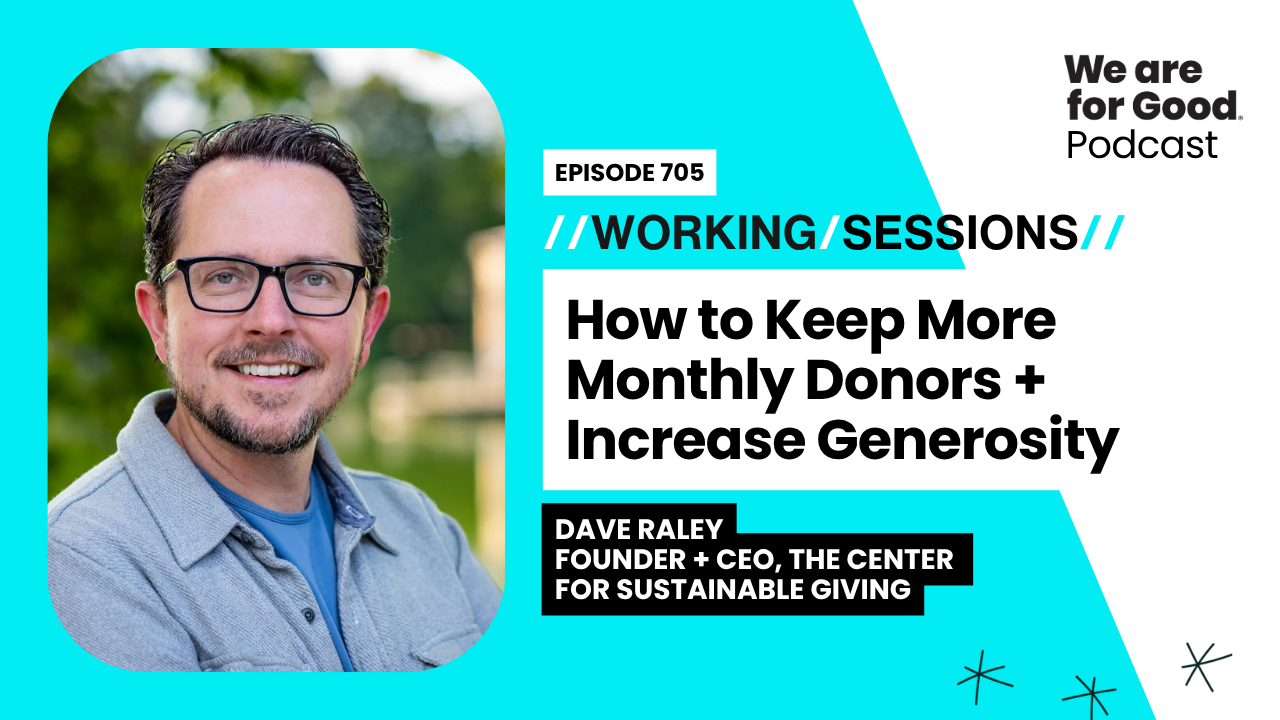

Meet Dave Raley 👋 He is the Founder and CEO of the Center for Sustainable Giving, author of The Rise of Sustainable Giving, and one of the most trusted voices in the recurring giving space. He has worked with thousands of nonprofit leaders to grow their monthly giving programs. In this Working Session, he is tackling two of the most overlooked opportunities in monthly giving: reducing churn and upgrading the donors you already have.
In this Working Session, you’ll hear:
The two types of churn and how to fix them: involuntary (credit card failure) and voluntary (donor chooses to leave), plus the systems to address both
How to keep monthly donors engaged using three words: affirm, engage, and appeal, and why your recurring donors are actually your best additional gift prospects
How to upgrade your existing monthly donors with a timely, specific ask, and why most organizations are leaving this on the table entirely
Welcome back to Working Sessions: hands-on, clarity-filled conversations designed to help you move real work forward inside your organization.
Let's get to work.
Episode Highlights:
Churn vs. retention: the reframe that changes everything (2:17)
58% of donors don't give again: making it real (4:17)
Monthly donor churn vs. single gift churn (4:32)
Involuntary churn: credit card failure and what to do (6:40)
Two solutions: automate and outreach (7:55)
Voluntary churn: acknowledge, affirm, and save the gift (9:16)
Three words for monthly donor retention: affirm, engage, appeal (13:15)
Recurring donors give 25% more annually on average (16:21)
How to upgrade your monthly donors (19:19)
Dave's one good thing + free resource (26:54)
Episode Transcript
“Sustainable, recurring giving is more accessible to more charities than at any other time in history. Full stop. The question is, are you going to take advantage of it?”
First: Stop Using Retention. Start Using Churn.
Retention is a pleasure metric. Churn is a pain metric. And according to human psychology, we are far more motivated to avoid pain than to pursue pleasure.
When you say, "I have 42% retention," you feel okay. When you say "I'm losing 58% of my donors every year," you want to do something about it immediately.
That is the point. Use churn. It will light a fire.
For context: the average single gift donor retains at about 42%, meaning 58% churn. Monthly donors are much stickier, retaining at 78-86%, resulting in 14-18% churn. Still, depending on the size of your program, that could be dozens, hundreds, or thousands of donors walking out the door every year for no good reason.
Why Right Now: The Great Wealth Transfer
We're living through the largest wealth transfer in human history. As the baby boomer generation passes wealth down to the next generation and to charitable causes, an estimated $72 to $84 trillion will change hands in the United States by 2045.
The Two Types of Churn (and What to Do About Each)
👉 Involuntary Churn: Credit Card Failure
Involuntary churn happens when a donor stops giving through no intention of their own. The number one cause is credit card payment failure. Up to 25% of credit cards turn over every year, and when that happens, the donor doesn't even know they've stopped giving.
Automate it. Log into your donation platform and find your credit card auto-updater. Most platforms have one and many organizations never turn it on. Some platforms can replace a credit card number automatically even in cases of fraud. Turn this on today.
Build an outreach process. When a payment fails, what actually happens at your organization? Who gets the notification? Who reaches out, and how? Build a clear, proactive process: an email series, a phone call, a personal note. Do not wait for the donor to figure it out.
👉 Voluntary Churn: The Donor Who Wants to Cancel
Voluntary churn is when a donor actively decides to stop giving. When that call or email comes in, most organizations process the cancellation and move on. That is a missed opportunity.
Acknowledge. Tell the donor their gift has made a real difference. Mean it.
Affirm. Thank them for their loyalty. Do not make them feel guilty.
Ask. Would they consider pausing their gift for a few months? Reducing the amount rather than canceling? Just ask. You will be surprised how often someone says yes.
And while you have them: listen. Why are they leaving? Financial hardship? Lost connection with the mission? That information is gold.
Three Words for Keeping Monthly Donors Engaged
When someone joins your monthly giving program, they are making a sacrificial gift. They are saying: I trust you with my credit card, with no end date. That is a different level of relationship. Honor it.
Dave's framework for keeping them: Affirm. Engage. Appeal.
Affirm. Not just after the first gift. On an ongoing basis. A phone call, a handwritten card, a voicemail, a personalized email. Show them their gift is making a difference in a specific, ongoing way.
Engage. Invite them into a two-way conversation. Ask why they give. Ask if there are ways they can advocate for you or connect you with others. One of the most effective tactics: assign a real person as the face of your monthly giving program. Donors get emails from that person. They know their name. It humanizes the relationship. And it can all be done with the marketing tools you already have.
Appeal. Monthly donors are some of your best additional gift prospects. On average, they give 25% more annually on top of their recurring gift. But many organizations remove monthly donors from all communications to avoid bothering them. Do not do this. These are your most loyal people. They want the updates. Keep them in the fold and keep asking.
How to Upgrade Your Monthly Donors
Most organizations never ask their existing monthly donors to increase their gift. That is an enormous missed opportunity.
The key to a successful upgrade ask is this: make it timely and specific.
Do not say: "Hey, you've been giving $50 a month. Would you give more?"
Do say: "Since you started giving, we've tripled the number of families we're serving. We're overwhelmed with demand, and your impact has never mattered more. Would you consider increasing your monthly gift to help us meet this moment?"
The reason matters. The timing matters. A couple of times a year, with a specific reason tied to something real happening at your organization, make the ask. Many of them will respond.
Where to Start This Week
1. Know your numbers. How many monthly donors do you have? How much are they giving? What is your churn rate? You cannot improve what you don't measure.
2. Check your failed credit card process. Log into your donation platform. Is your auto-updater turned on? What happens when a payment fails? Build the process if you don't have one.
3. Grab the free resource. Dave and the team at the Center for Sustainable Giving have put together a 20-page PDF: 7 Next Steps to Growing Your Sustainable Giving Program. It is free and it is practical. Get it at sustainablegiving.org/blueprint.
Connect with Dave
The Center for Sustainable Giving
Connect with Becky
Come be part of the We Are For Good Community—totally free.
Join fellow changemakers, share takeaways from this working session, and keep collaborating in a space built for connection, inspiration, and real impact: www.weareforgoodcommunity.com
Say hi👇
LinkedIn / Instagram / Facebook / YouTube