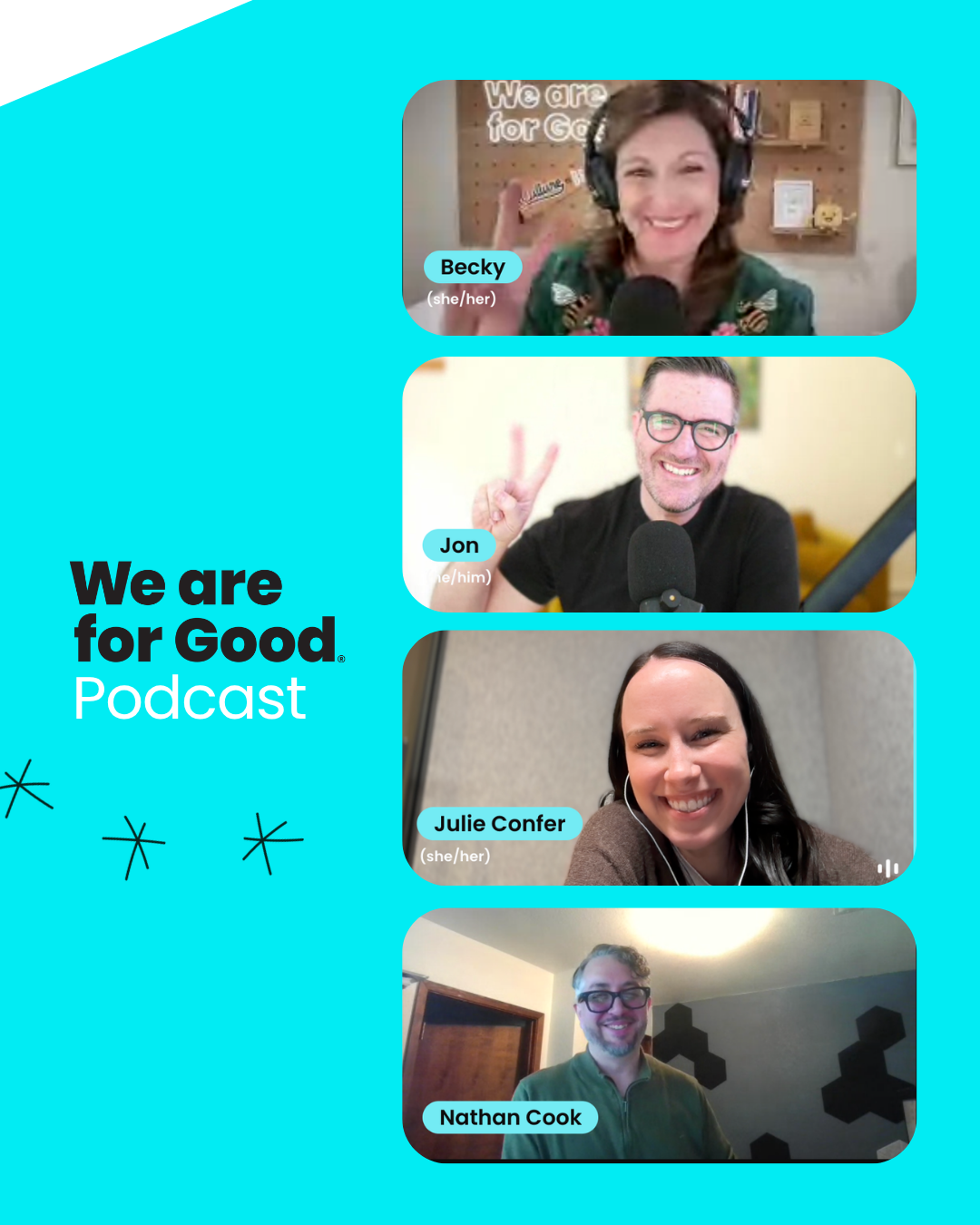
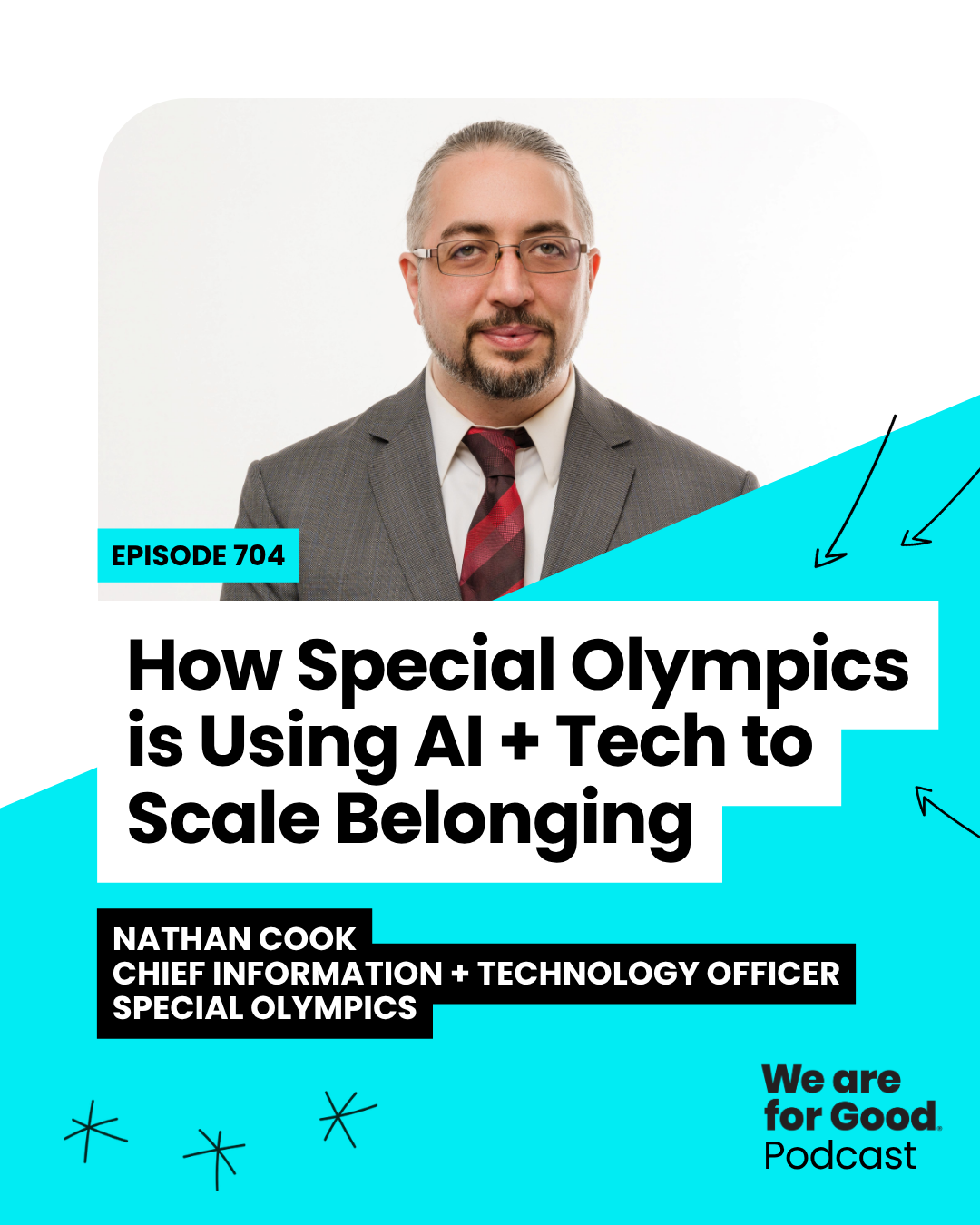
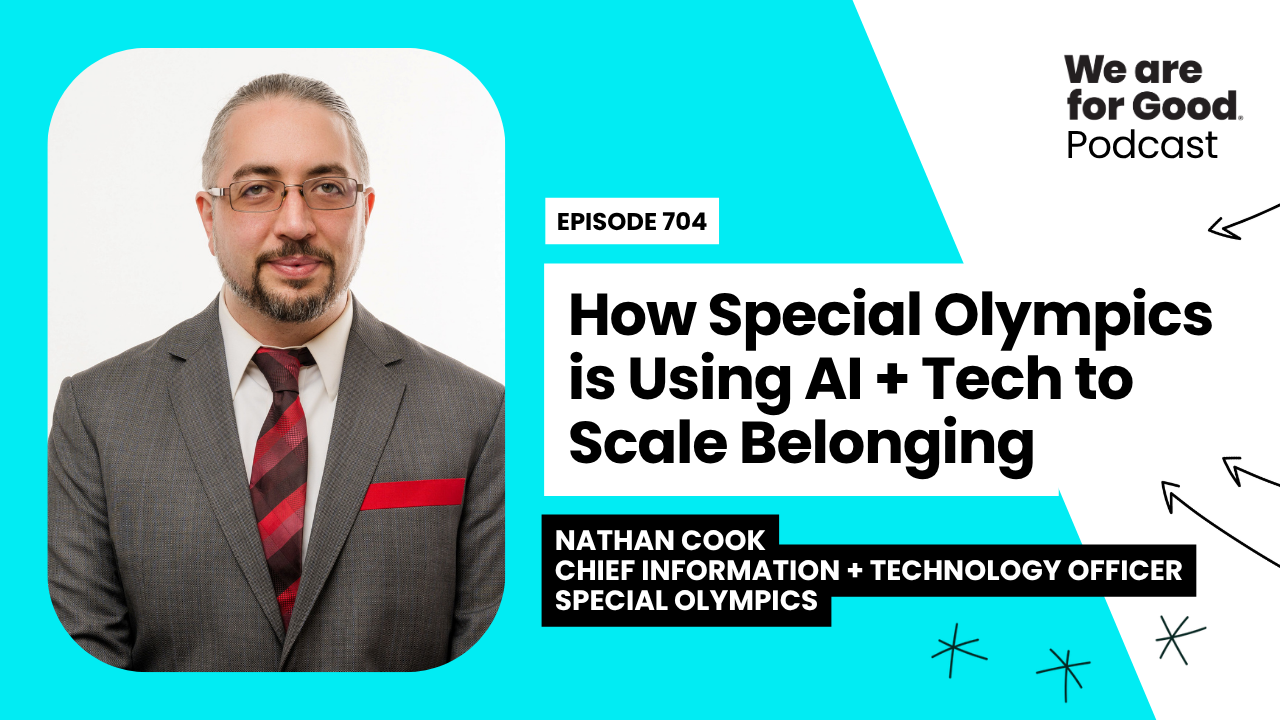
704. How Special Olympics Is Using AI + Technology to Scale Belonging - Nathan Cook
Listen to this episode
About This Episode
Special Olympics International serves more than 5 million athletes across 172 countries. And for years, every single one of those programs ran its own systems, its own processes, its own ways of engaging athletes, volunteers, and families. Nathan Cook joined as Chief Information and Technology Officer and saw both the barrier and the possibility. What followed is a digital transformation built on a principle that should guide every organization using technology: nothing about us without us. Build with the community you serve, from day zero, before you write a single line of code. This conversation is about what happens when you take that seriously, including a unified digital platform, 50% athlete self-registration, and an AI-powered healthcare assistant that is changing what a medical visit looks like for a person with an intellectual disability.
Todays Guest: Nathan Cook
Nathan Cook is the Chief Information and Technology Officer at Special Olympics International, where he leads digital transformation, AI integration, and technology strategy across one of the world's largest sports organizations for people with intellectual and developmental disabilities. Nathan has spent his entire career at the intersection of technology and people, from e-commerce to manufacturing, always focused on how technology can improve the human experience. He joined Special Olympics International because he believes this work is more important and more valuable than anything he has done before.
What You'll Learn in This Episode
Why Special Olympics' fragmented digital infrastructure was limiting the mission, and how a unified digital center of excellence changed what is possible at scale
How technology enabled 50% of Special Olympics athletes to self-register for the first time, representing 2.5 million individuals who can now own their own information without requiring volunteer or staff support
What universal design actually means in practice: going to the people you serve before you build anything, asking what works and what doesn't, and letting their experiences shape the design
The story of Med Buddy: an AI-powered healthcare assistant that sits in the room during medical visits to translate complex language, predict what an athlete is trying to communicate, and advocate for better care outcomes for people with intellectual disabilities
Why AI has an ableism problem, what Special Olympics' research found when they analyzed how large language models describe people with disabilities, and what organizations need to do before AI gets embedded in more hiring and decision-making
How to actually get started with AI without waiting for perfect: find where AI fits naturally, build small wins, and keep building
Powerful Quotes
"Nothing about us, without us. Before we even start building a thing, we go and talk to them and ask: what works for you, what do you need? What doesn't work for you?" -Nathan
"If you get behind with technology like this, it's very hard to catch up. You haven't built the muscle and understanding. Just go." -Nathan
"When organizations don't identify the places where AI fits naturally, they start trying to shoehorn it in. It's like trying to hammer in a nail with a screwdriver." -Nathan
"The ableism that is present in society, concealed out of politeness, out of social constructs, is not concealed in the corpus of information these large language models are trained on." -Nathan
"Eat the water beetle. The bigger the thing gets in your mind, the harder it becomes to actually do and overcome. Just go." -Nathan
A Generosity Story That Will Stay With You
At a Microsoft accessibility lab, Nathan met a mother whose son was nonverbal and autistic. He could not communicate with her verbally. They gave him a device where he could type what he wanted to say, and it would say it for him. He started using it immediately, asking for candy and video games. And she was crying, because she thought she was never going to be able to have a conversation with her own son. Technology bridged that gap. That, Nathan says, is the why.
Episode Chapters
Opening teaser (0:02)
Meet Nathan Cook (2:33)
Programming robots as a kid: Nathan's path to this work (3:04)
Why Special Olympics' fragmented systems were limiting the mission (4:16)
Technology at scale: how 50% of athletes can now self-register (5:04)
Building with athletes, not just for them: universal design in action (9:04)
Meet Med Buddy: AI as a healthcare advocate (13:34)
Advice for nonprofits hesitant about AI (18:07)
AI bias and ableism in large language models (22:04)
A generosity story: a mom who finally talked with her son (25:08)
One good thing: eat the water beetle (28:03)
Resources Mentioned
Special Olympics International - specialolympics.org
Med Buddy - AI-powered healthcare assistant, currently in pilot - more info coming later this year
USA Special Olympics Games 2026 - Minneapolis - specialolympics.org
Nathan Cook on LinkedIn - open to conversations about technology, Special Olympics, disability, and inclusion
Global Accessibility Awareness Month - observed annually in May
Connect with Jon McCoy
Connect with Becky Endicott
Come join us in the We Are For Good Community!
Join fellow changemakers, share takeaways from this episode, and keep collaborating in a space built for connection, inspiration, and real impact: www.weareforgoodcommunity.com
Say hi👇
LinkedIn / Instagram / Facebook / YouTube