Trust Is the Work Now: The Three Layers Every Nonprofit Leader Needs to Build It
Most of us know trust matters. But Aila has a more urgent take: trust isn't a nice-to-have soft skill. It's the actual work. It's how your mission moves. It's how repair becomes possible, and it's how the narratives your organization is working to change can actually shift.
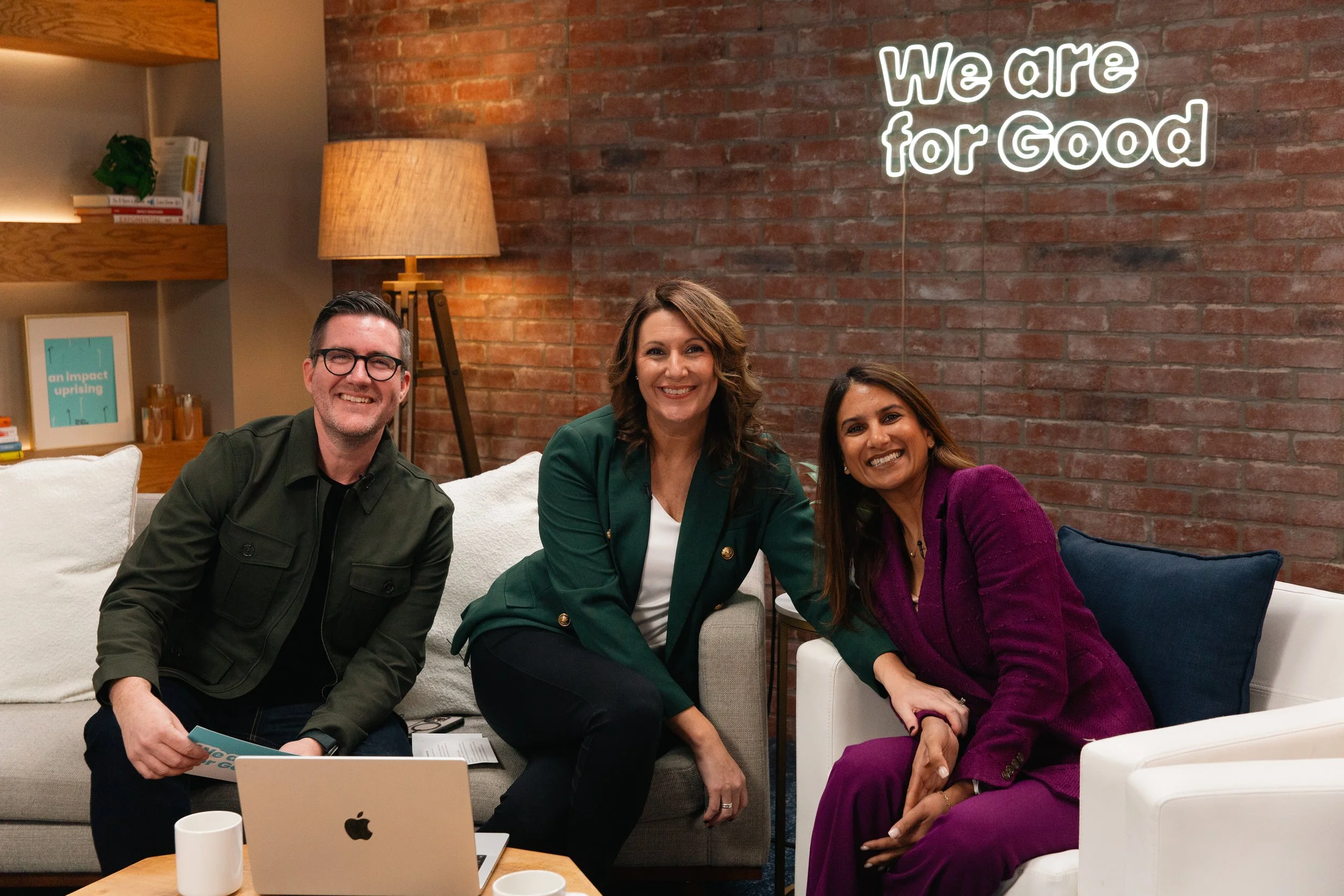
Aila shared this framework during her keynote at the We Are For Good Summit, and it's one of the most practically useful takes on organizational trust we've heard for nonprofit leaders navigating a difficult moment. Here's what she covered — and what it means for your organization.
Why Trust Is Different in the Nonprofit Sector
Before talking about how to build trust, Aila asks us to sit with something uncomfortable: not everyone comes to the table with the same relationship to trust.
Many of us move through the world with what she calls "everyday trust" — we board planes piloted by strangers, we walk down streets assuming safety, we engage with systems expecting they'll function. That kind of trust feels ordinary because we've been privileged enough for it to be invisible.
But the communities nonprofits exist to serve often don't have that luxury. The sector exists, Aila argues, precisely because the dominant story hasn't worked for everyone. We find gaps of equity and access and work to widen the circle of who belongs. That means when we enter communities as practitioners, we can't assume our experience of trust is in the room.
"We often step into spaces where trust has already been violated," she says. "There may have been harm by institutions, suppression of voice, surveillance disguised as support."
This shapes the entire posture of the work. What nonprofit leaders often label as resistance — hesitation, silence, caution — is frequently something else entirely: risk management. Communities aren't resisting you. They're protecting themselves, measuring the cost of trust, and asking, sometimes silently: What happens if I say yes? What happens if I tell the truth? What happens if this doesn't work?
When we recognize that, everything changes. We slow down. We listen differently. We stop asking "why won't they engage?" and start asking "what would have to be true to make this moment safer?"
The Three Layers of Trust
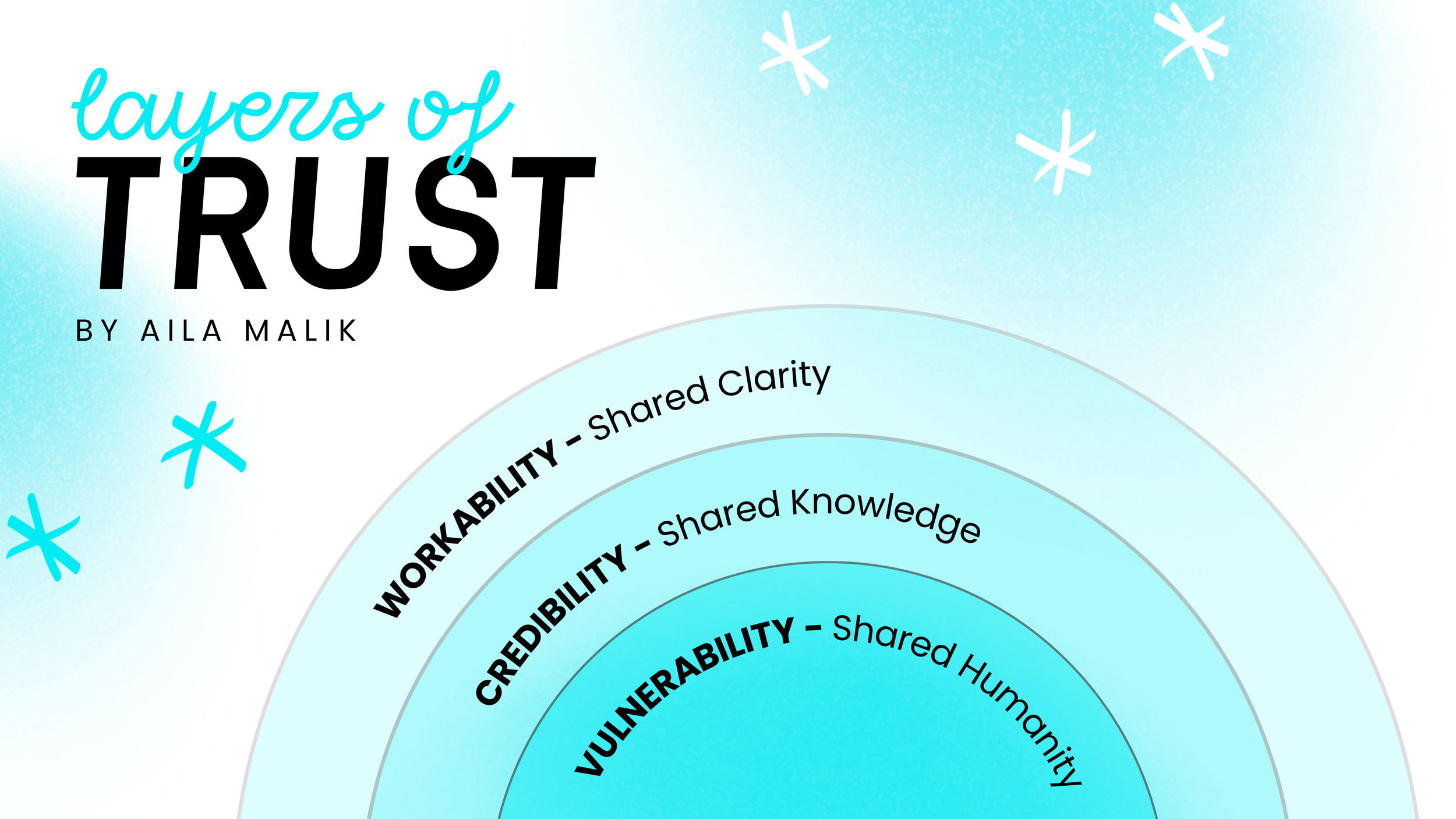
Aila thinks of trust not as a single thing, but as layers — like an onion. At the core is the most protected part: our identity, beliefs, and values. Trust doesn't start there. It starts at the edges and works inward.
Layer 1: Workability
The outermost layer is the most basic form of trust. It's what allows people to coexist and function. Inside an organization, workability looks like a clear mission, a coherent strategy, defined roles and responsibilities, and shared understanding of who makes which decisions.
You don't have to be best friends for workability. You just have to know how to work alongside each other. Aila uses the image of an F1 pit crew — they can change all four tires in under four seconds because everyone knows their role exactly. No one looks over anyone's shoulder. The driver trusts the crew with their life. That's workability at its best.
For nonprofits, this is the foundation. If your team doesn't have clarity on mission, decision-making, and roles, you're trying to build something on sand.
Layer 2: Credibility
The second layer runs a little deeper. We begin to trust more because of evidence and experience. Credibility isn't certainty — it's evidence strong enough to take a risk.
Aila illustrates this with two stories: riding in a fully self-driving car in San Francisco, and skydiving in Namibia with her family. In both cases, she didn't trust blindly. She assessed. She asked questions. She looked at the data. And then she calculated whether the risk was worth taking.
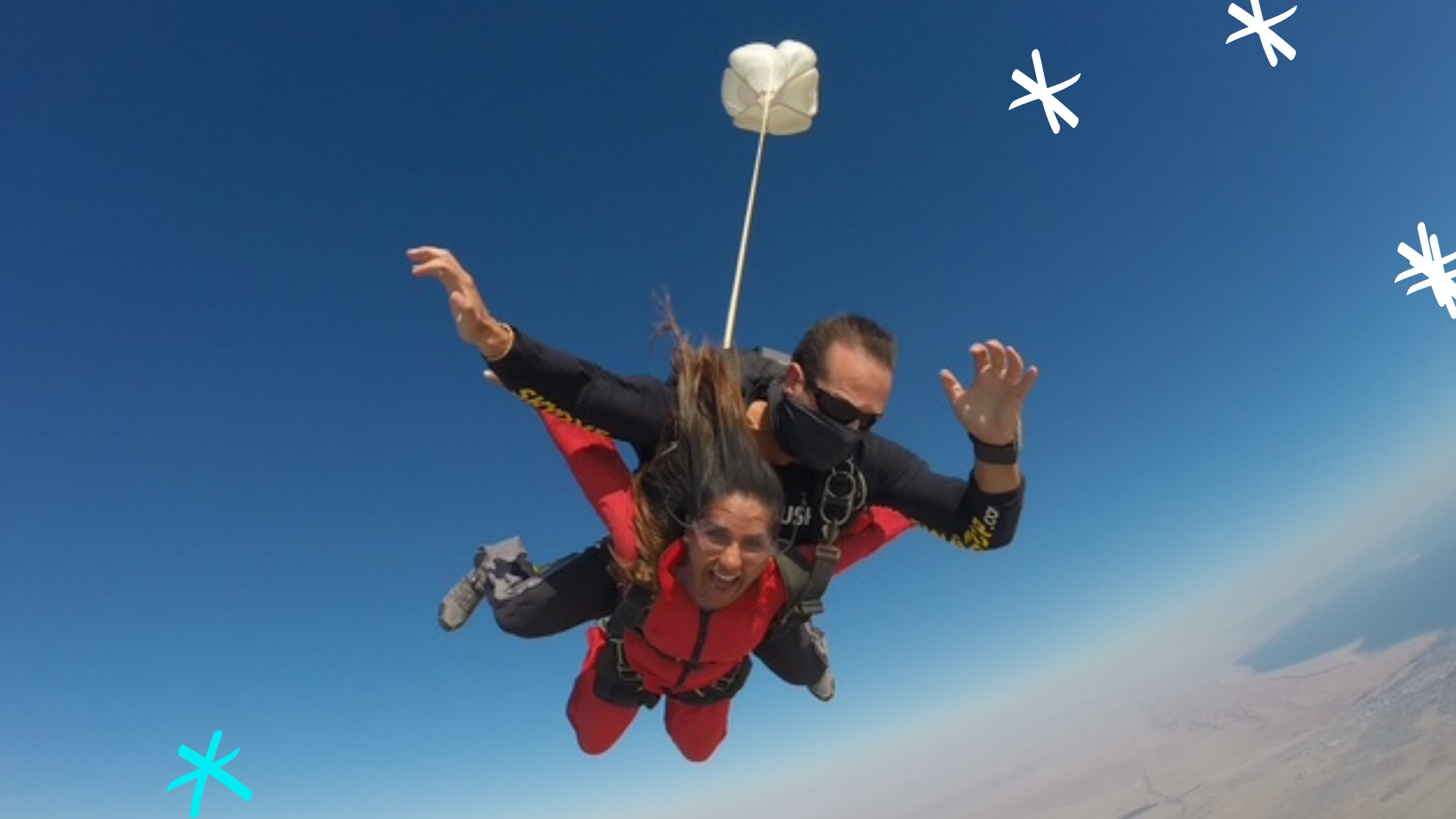
"Credibility doesn't remove the risk," she says. "It helps us decide whether the risk is worth taking."
For nonprofits, you build credibility not by saying "trust us" — but by showing your work. Sharing your data. Showing up consistently. Demonstrating your outcomes. Being willing to adapt and say what you learned when things didn't go as planned. This is especially true with funders: long-term funder relationships are built on credibility and the kind of vulnerability that lets people see you honestly, not just your polished wins.
Layer 3: Vulnerability
The innermost layer is the most precious — and often the rarest. Vulnerability, as Aila defines it, isn't emotional dumping. It's not the absence of boundaries. It's a generosity of spirit that says: I will offer a little more of my truth than is strictly required.
It lives in the grace of both the giving and the witnessing. It can show up in small moments — answering "how are you?" with "it's been a hard season" instead of "I'm fine." That extra bit is a gift. It invites the other person into something without demanding anything in return. And often, it's mirrored back.
Vulnerability as generosity can also look like: owning a mistake without defensiveness. Giving someone credit for what you learned from them. Naming uncertainty instead of pretending for certainty. Expressing sincere gratitude for the impact that mattered.
"These moments don't weaken leadership," Aila shared. "They strengthen it. They build morale and cohesion."
This is especially critical right now — at a time when AI and efficiency are accelerating, and human connection feels increasingly distant. In an age of speed and optimization, vulnerability and generosity may be the most radical practice available to nonprofit leaders.
Q&A: Practical Trust-Building for Nonprofit Leaders
Aila spent the second half of her session coaching through real questions from our community. Here's what she had to say:
How do I find long-term partners and funding through the lens of trust?
Lead with credibility and authentic vulnerability — not a polished pitch. Share the messy parts alongside the wins. Deep funder relationships are built when funders feel like genuine partners, not just recipients of curated reports. "Give them the straight-up parts of what you know, and what you need help with," Aila says. "I love the embrace of the messy." Funders who feel genuinely seen are the ones who stay.
"You drop into organizations at points of transition. How do you build trust quickly in those situations?"
Come in as a student first. The role isn't to fix things or prove value — it's to listen, understand the culture, and honor what the team has already carried. "No one needs a babysitter," Aila says. Enter with deep humility, ask more than you tell, and make sure people know you're there to amplify their expertise, not replace it.
"We don't have trust established in our community, and really don't know where to begin. What's a great first step?"
Start with your organizational community — get your leadership team and board together and ask: what are we going to build, protect, partner on, and amplify? Create a shared plan and lift it up publicly. Invite the community to respond: Is this you? Does this look like you? What are your stories? That's where trust starts — with a narrative that becomes collective.
"How do you encourage and facilitate trust when stakeholders have different goals and objectives?"
Track back to what you're actually hearing before jumping into solutions. Reflect it back: Am I hearing that this is what you care about most? Is this your concern? Then see if authentic alignment is actually there. Sometimes it isn't — and that's okay to name. Force clarity so you can understand whether alignment is even possible.
"How do you stay rooted in trust and vulnerability in the middle of doing all the work?"
Consistency. Whatever you're communicating, communicate it consistently. Town halls, mission memos, "what do I know / what don't I know" check-ins — all of it builds the muscle. And hold containers for uncertainty: office hours, open sessions where people know they can show up and ask questions. Over-communication and increased face time are trust deposits.
"Our organization didn't build trust early on. How do you bounce back?"
Start with a listening tour and an apology tour — together. Help leadership name what can be owned, and own it clearly. Show up with consistency after that. Nothing may shift in the first conversation, but when people see you come back again and again without agenda, trust begins to rebuild. Acknowledgment has to come before the solution.
"What are the best things to do to build trust as a young organization?"
Three things: strategic clarity (does everyone — staff, board, community — know your mission and their role in it?), a thriving culture of trust and transparency (are people empowered to say what they don't know?), and vulnerability modeled from the top. If mistakes aren't welcomed as learning, growth stops. If the leader can't be vulnerable, no one else will be. Start there.
The Invitation
Aila closes her keynote with a simple challenge: after you return to your organization and your community, notice which layer of trust you tend to operate in. Notice what feels most comfortable — and what would need to be true for you to go just one layer deeper.
Because trust is not peripheral to the work of nonprofits. It is the work. It's how missions move. It's how repair becomes possible. And when it's practiced with humility, with evidence, and with generosity, it doesn't just strengthen your organization. It helps rewrite the story of who gets to belong.
Aila Malik is a lawyer by schooling and a nonprofit executive by trade who partners with mission-driven organizations across education, corrections, and community-based sectors to lead launches, expansions, and stronger systems rooted in equity. With 20+ years supporting young people and communities, she founded Venture Leadership Consulting and, as part of her family's "Franklin Street Globetrotters" journey, spent 54 weeks traveling to 41 countries and partnering with 25+ NGOs to deepen empathy through humanitarian and environmental