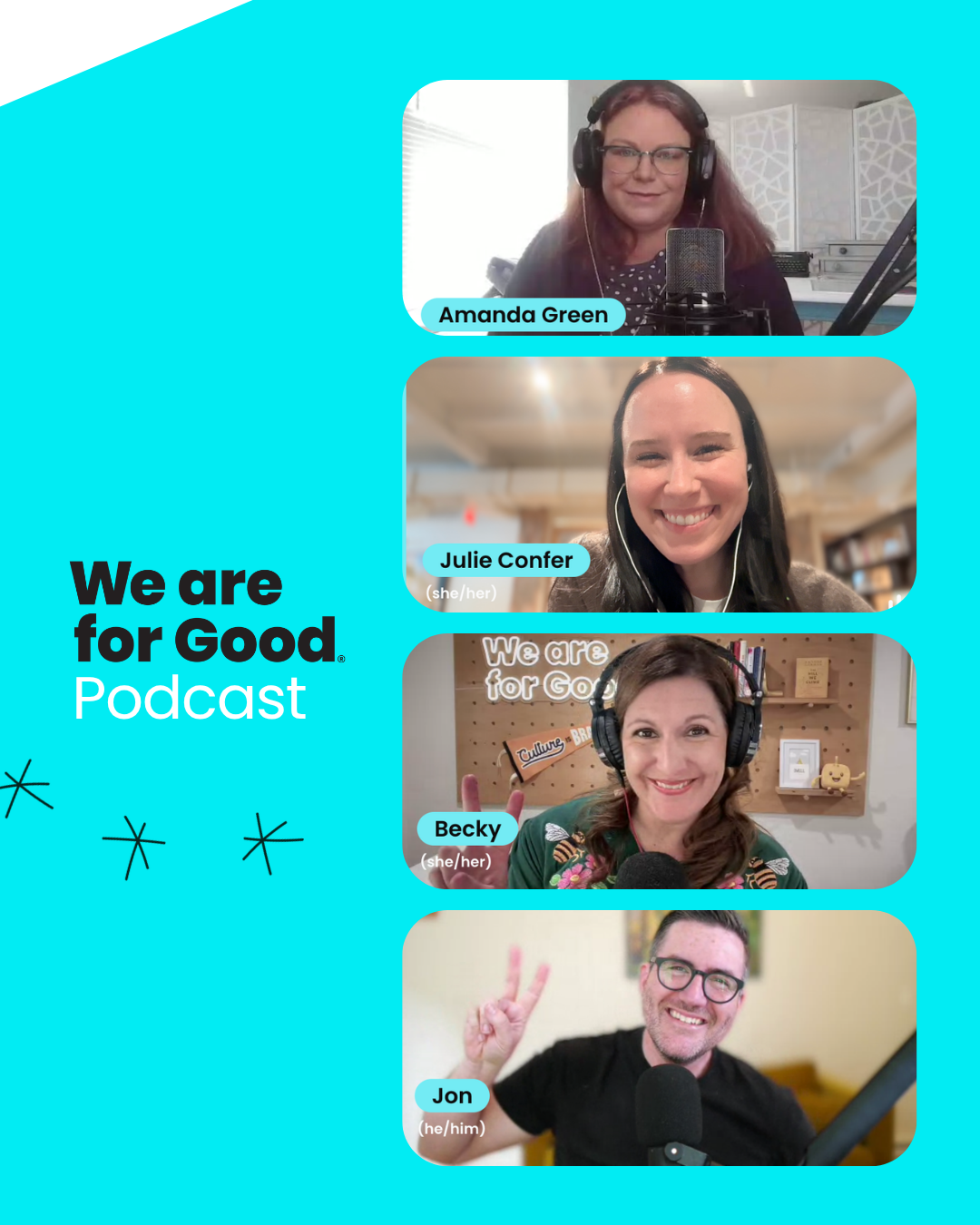
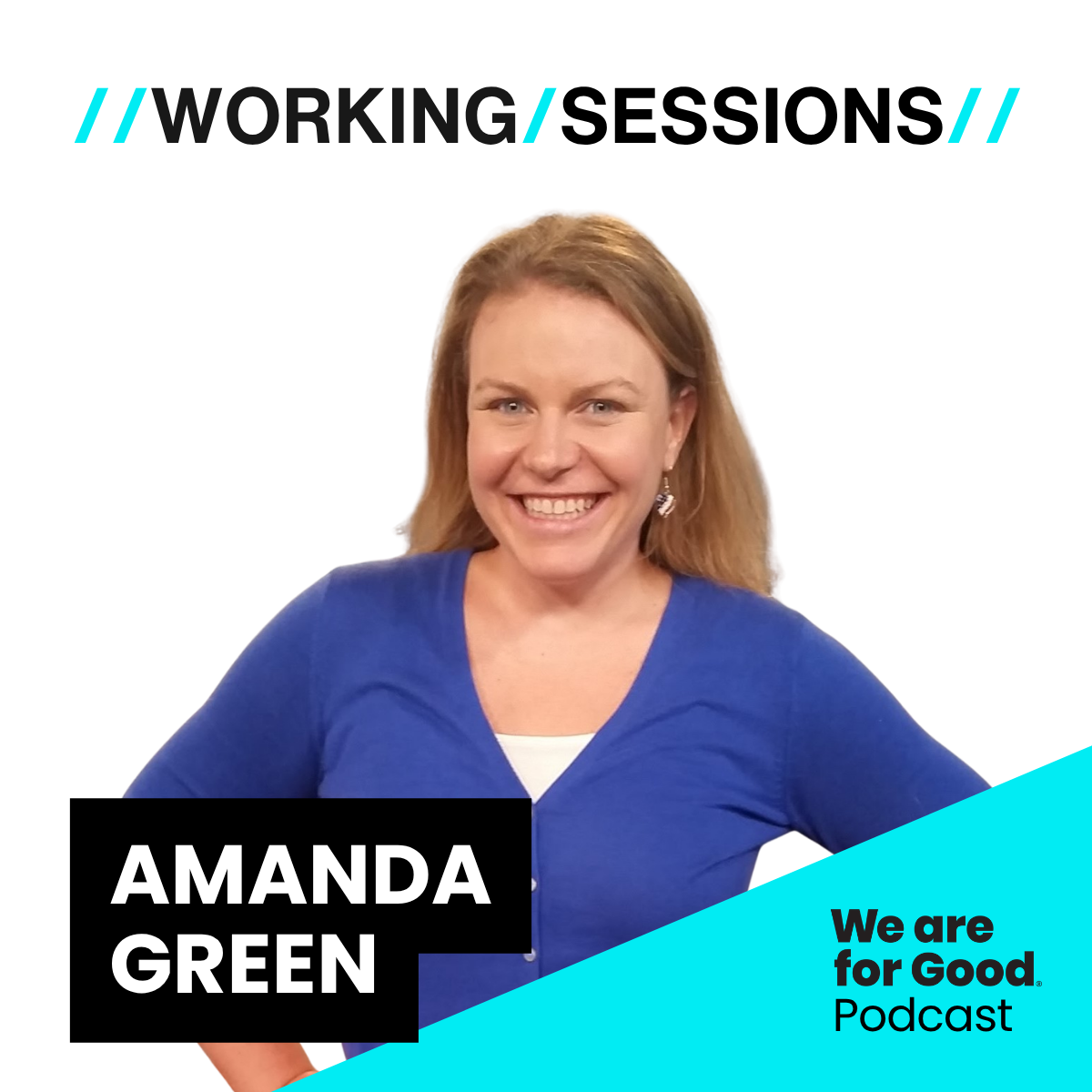
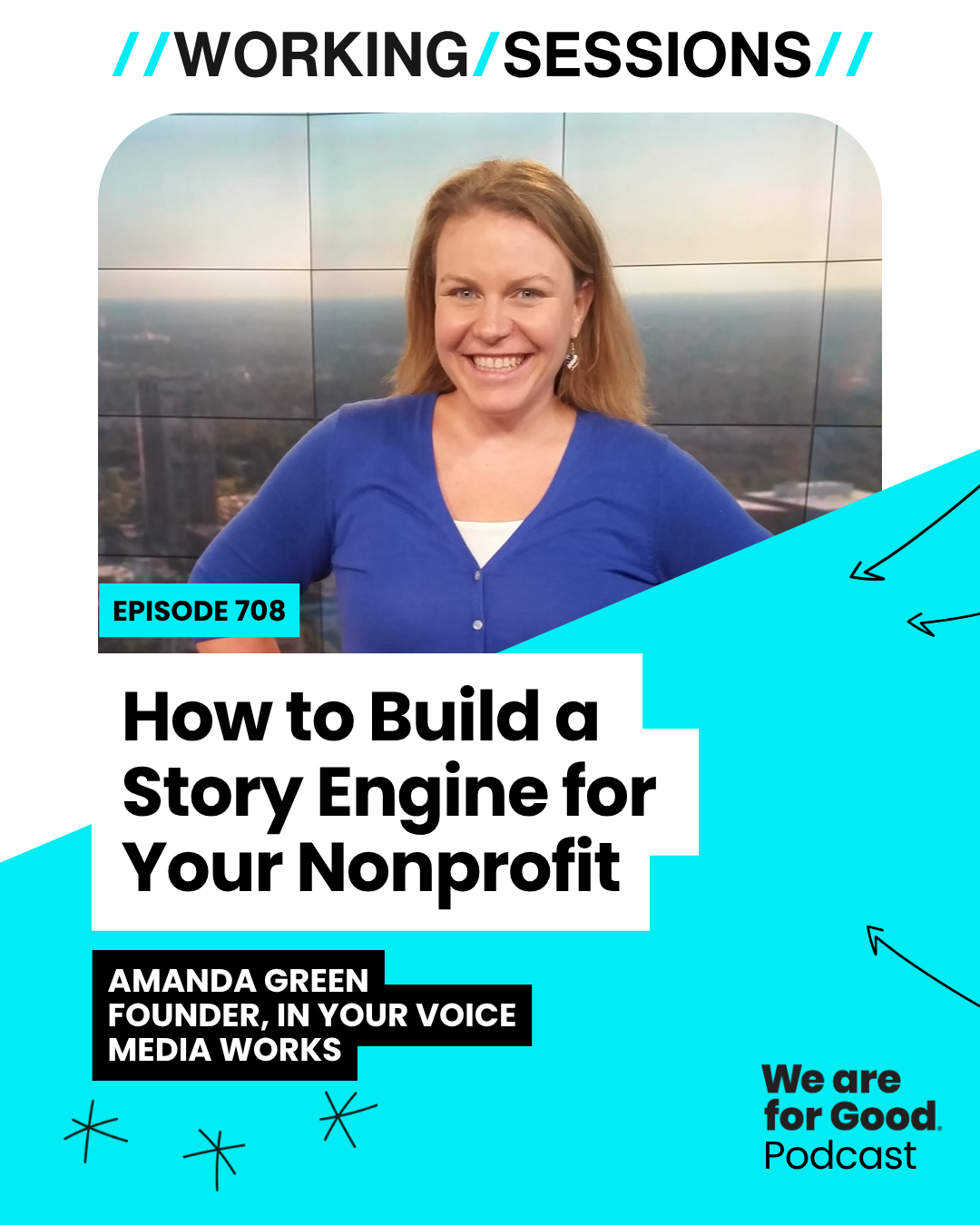
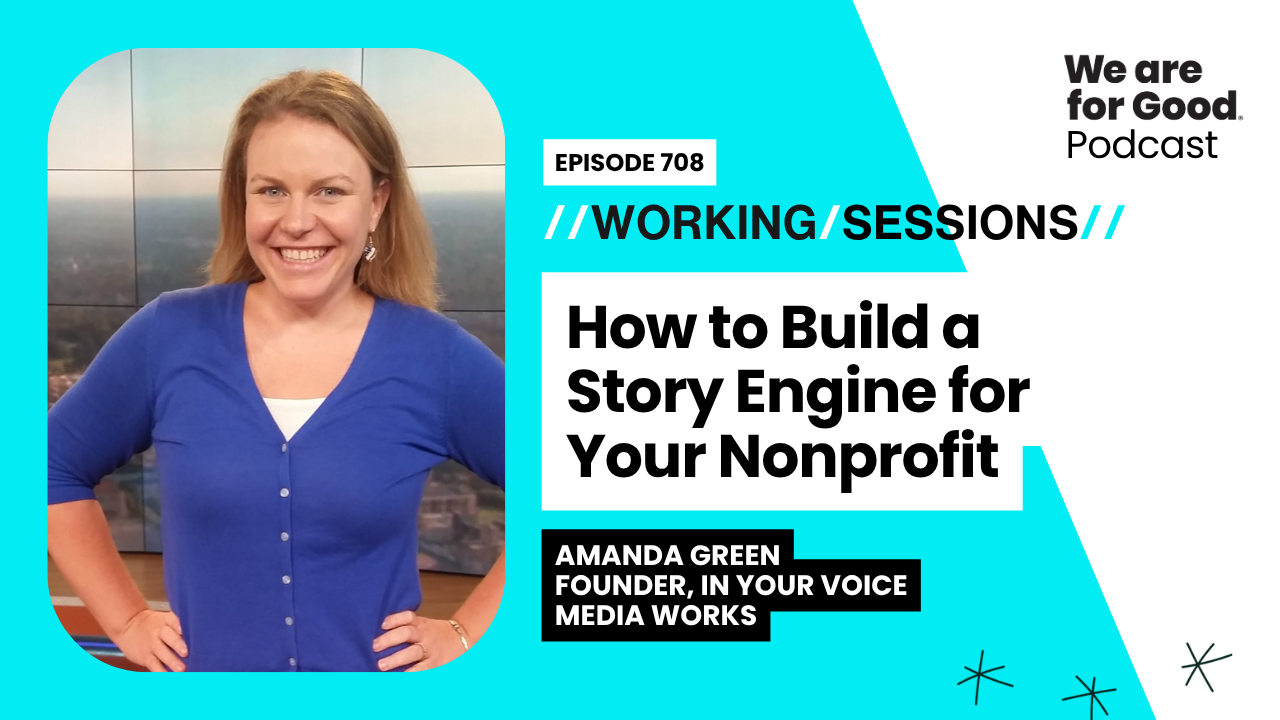
708. Working Session: How to Build a Story Engine for Your Nonprofit - Amanda Green
Listen to this episode
Today’s Guest
Amanda Green | Founder, In Your Voice Media Works
About This Episode
Content calendars and campaigns do not build momentum. Story engines do.
Amanda Green spent 12 years in TV newsrooms and more than 20 years in communications before founding In Your Voice Media Works, where she helps cause-led organizations build internal newsrooms: the systems, workflows, and editorial instincts that turn scattered content into sustained storytelling.
In this Working Session, Amanda shares practical tools you can implement immediately. From the 10-minute editorial meeting to the 3-tab spreadsheet that ends the “what should I post today” problem forever. Together, we explore how nonprofits can stop scrambling for content and start building story systems that create consistency, trust + deeper connection over time.
What You'll Learn in This Working Session
Why nonprofits need to stop asking "what should we post this week?" and start asking "what is the story, and how do we work it?"
How to write an editorial mission statement that promises your audience something specific and guides every content decision
How to run a 10-minute editorial meeting that gets everyone in your organization contributing story ideas, from your board to the person who sweeps your floors
Amanda's 5-step story framework: define your beat, work your story pipeline, report and produce, publish and distribute, and measure and adjust
The story lead and channel lead system: who is responsible for gathering the story, and who is responsible for getting it out
The 3-tab spreadsheet that acts as your story bank, production tracker, and publishing planner all in one
Why community storytelling starts with listening, and how to develop the "everywhere I am, everything is a story" mindset
Amanda's 5-Step Story Framework
Step 1: Define Your Beat
Who are you publishing for? Why are you the person to tell this story? Start here before you write a single word.
Step 2: Work Your Story Pipeline
Assign a story lead (the person who brought the idea and ensures it gets told accurately) and channel leads (the people responsible for getting it out to each specific platform). Everyone knows their role before the story gets written.
Step 3: Report and Produce
Ask yourself: if a journalist saw this, would they see the craft in it, or would they call it marketing? That is your quality test.
Step 4: Publish and Distribute
Know where a story is going before you write it. Is this for Instagram? A media alert? Your year-end donor report? Plan the distribution at the beginning, not the end.
Step 5: Measure and Adjust
How do you know it is working? What do you do with that information? Build a regular cadence of checking and adjusting.
The 3-Tab Story Planner Spreadsheet
Your story bank lives here. Tab one is your story planner: topic, why you're the one to tell it, and the suggested format. Tab two is stories in production. Tab three is stories in the publishing phase. Every person in your organization can add to tab one. You do not have to be a content creator to contribute an idea.
Powerful Quotes
"Stop asking what content should we post this week, and start asking what is the story and how do we work it." -Amanda
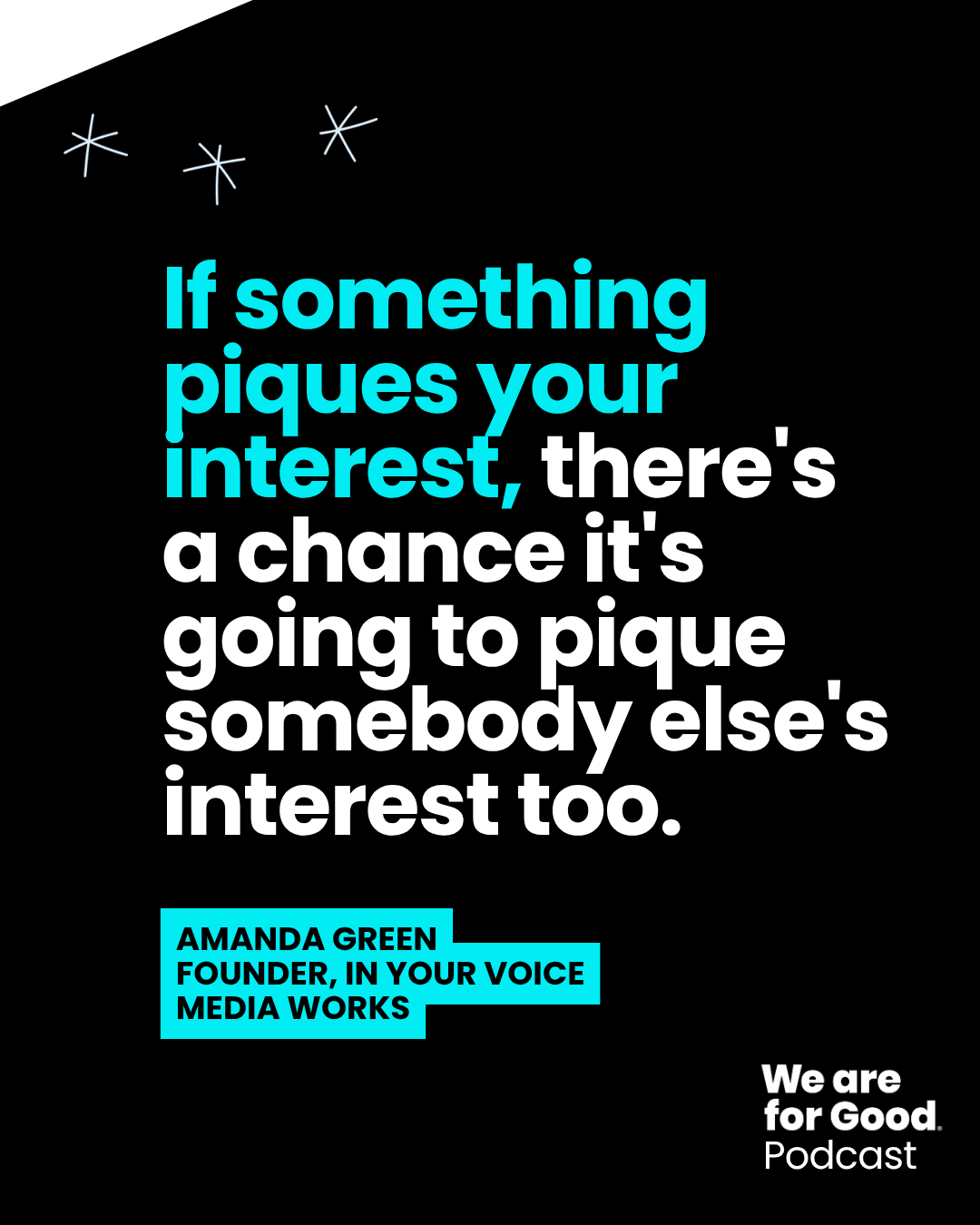
"Everywhere I am, all the time, everything is a story. If something piques your interest, there's a chance it's going to pique somebody else's interest too." -Amanda
"Story is the heartbeat of connection. It is the heartbeat of the reason why anybody comes back, why they give again, why they're reminded of why this work really matters." -Becky
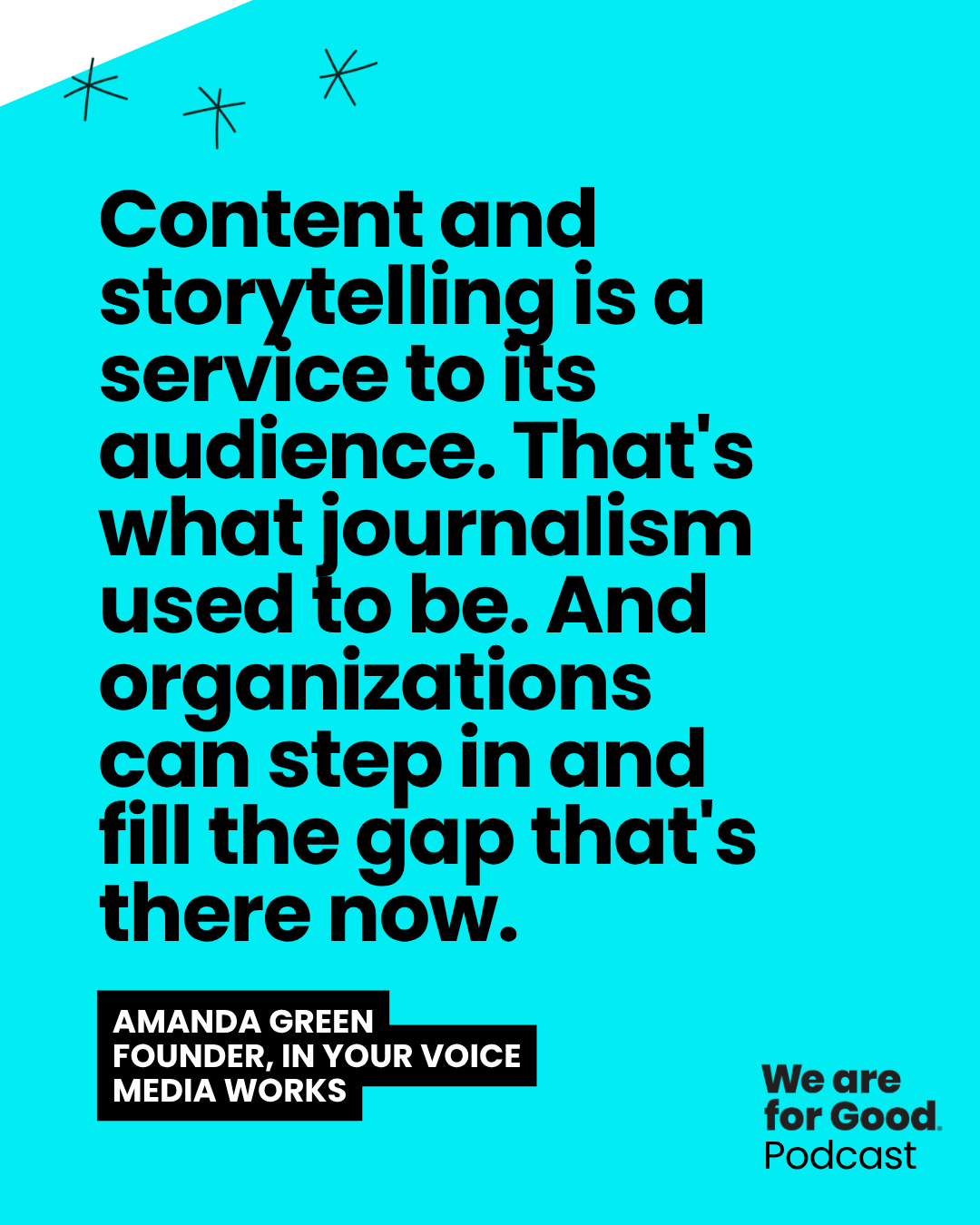
"Content and storytelling is a service to its audience. That's what journalism used to be. And organizations can step in and fill the gap that's there now." -Amanda
Episode Chapters
Meet Amanda (1:22)
Think like a media company: the mindset shift (2:30)
Stop asking what to post. Start asking what the story is. (2:50)
The editorial mission statement and editorial guidelines (4:00)
Audience analysis and building editorial judgment (5:00)
How to run a 10-minute editorial meeting (7:00)
Step 1: Define your beat (8:00)
Step 2: Work your story pipeline: story leads and channel leads (8:30)
Step 3: Report and produce (10:00)
Step 4: Publish and distribute (10:30)
Step 5: Measure and adjust (10:45)
Community as storytelling: the "everybody has a story" approach (11:00)
Story is the heartbeat of connection (13:00)
The 3-tab spreadsheet story planner (15:00)
One good thing: listen to the people in your community (16:47)
Resources and Next Steps
Connect with Amanda
LinkedIn / In Your Voice Media Works - inyourvoicemediaworks.com
Free 1-hour session for nonprofits - email amanda@inyourvoicemediaworks.com
Connect with Becky
Come be part of the We Are For Good Community—totally free.
Join fellow changemakers, share takeaways from this working session, and keep collaborating in a space built for connection, inspiration, and real impact: www.weareforgoodcommunity.com
Say hi👇
LinkedIn / Instagram / Facebook / YouTube