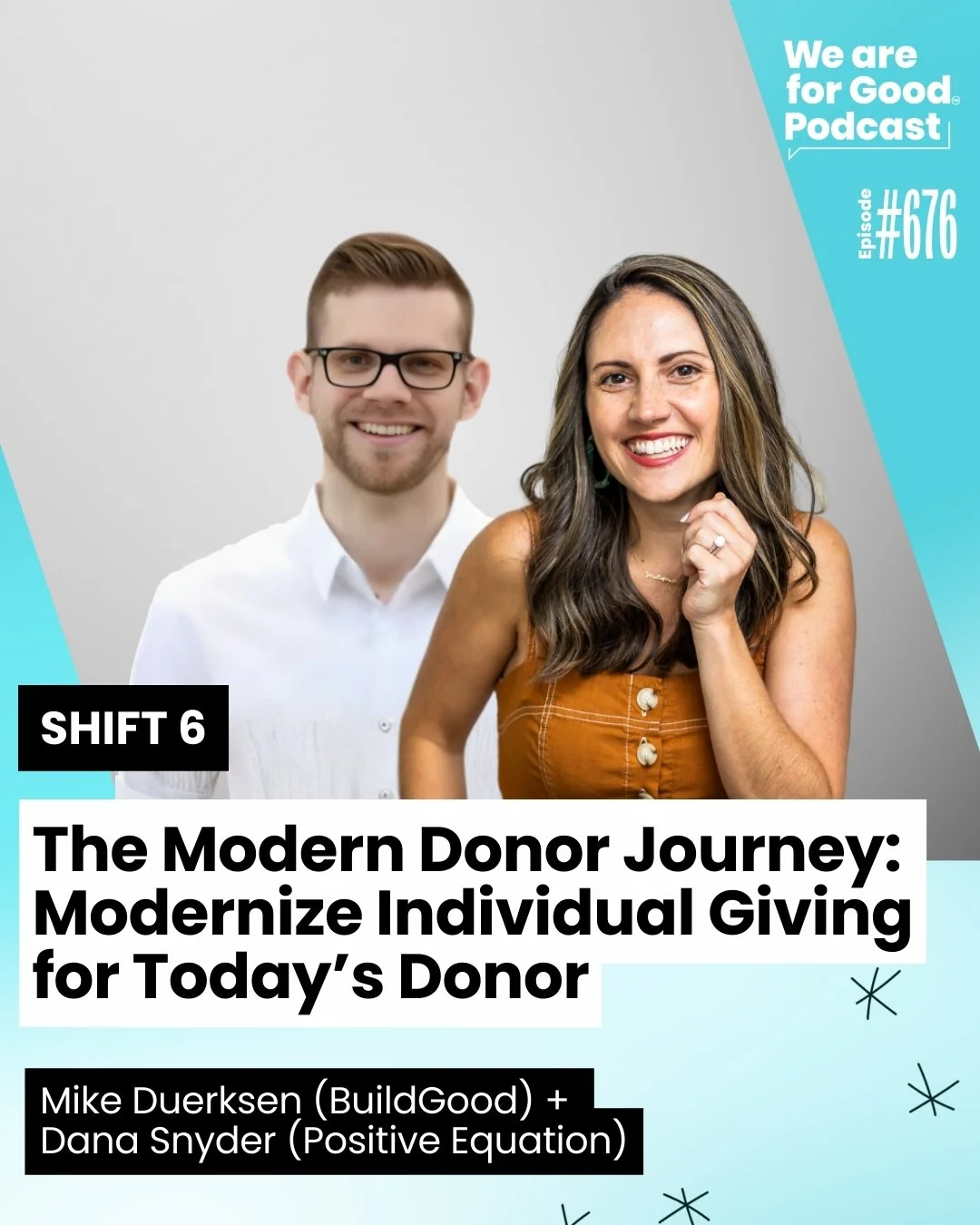
676. Shift 6 — The Modern Donor Journey: Modernize Individual Giving for Today’s Donor - Mike Duerksen & Dana Snyder
Listen to this episode
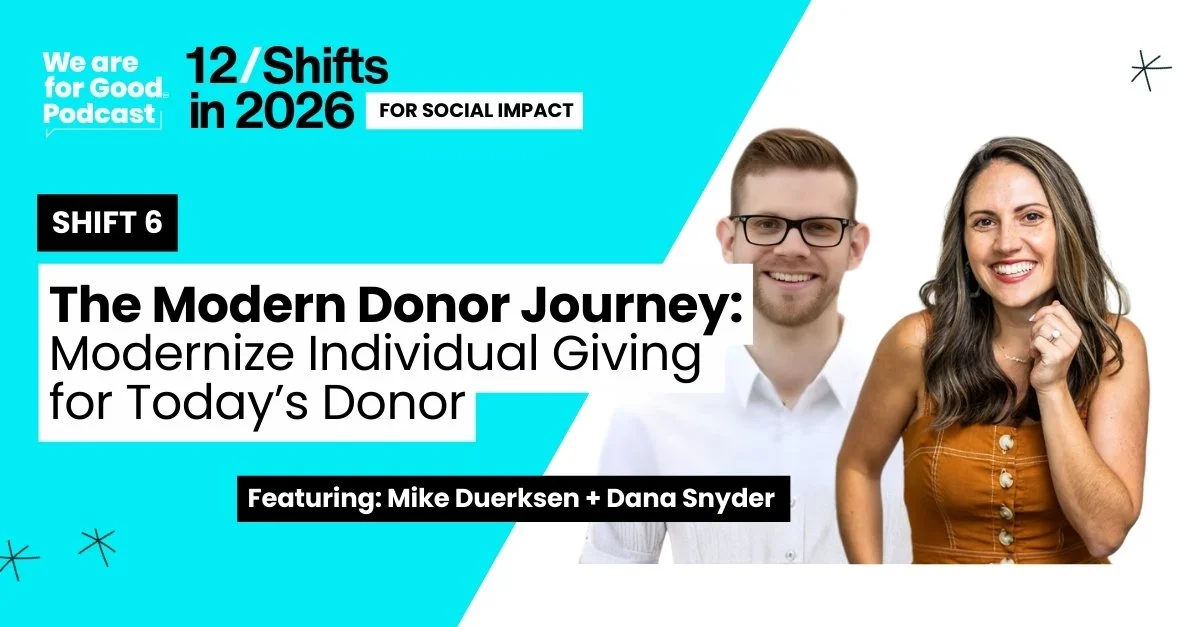
This episode is part of 12 Shifts in 2026 for Social Impact.
Overview
Today's episode continues our 12-part series: 12 Shifts in 2026 for Social Impact. Over twelve episodes, we’re unpacking mindset + strategy shifts shaping the future of fundraising, leadership, and doing good in 2026. Explore the series at weareforgood.com/12shifts.
Shift 6 / Modernize Individual Giving for Today’s Donor
In today's episode, Jon and Becky welcome back Dana Snyder (Positive Equation) and Mike Duerksen (BuildGood) — for a practical, honest conversation about what’s changing in donor behavior and what to do about it in 2026.
Together, they unpack why the donor journey is no longer linear, why friction in your systems is more expensive than ever, and how monthly giving becomes a risk-mitigation strategy for stability. You’ll hear how the first 90 days create “memory structure” for donors, what Mike calls the “forgotten copy” that can make or break trust, and why making generosity visible again can help restore it as a social norm — at home and in your community.
If you’re ready to remove friction, build trust faster, and create an individual giving strategy that fits how donors actually live and decide in 2026, this one’s for you.
You’ll walk away with insights on:
Practical insights on growing and sustaining monthly giving programs.
Strategies for building long-term donor relationships and increasing retention.
Tips for creating impactful campaigns that resonate with supporters.
Real-world examples of turning challenges into opportunities for growth.
Actionable takeaways for scaling nonprofit efforts without burning out your team.
Dive Deeper:
The Monthly Giving Summit (Feb 25, 1:00PM - Feb 26, 4:00PM EST)
Build Good Fundraising Podcast
How to Audit Individual Giving for Long-Term Retention
Step 1: Start with the first 90 days.
Retention begins at acquisition. The first 90 days build the memory and emotional connection donors form with your organization.
Step 2: Design for core human needs.
According to self-determination theory, every donor needs:
Autonomy: the gift was their choice
Competence: their giving made an impact
Relatedness: they feel connected to others
Donors who feel these are far more likely to give again.
Step 3: Lead with progress and impact.
Show momentum — small wins matter. Share stories that highlight transformation and the people made possible by generosity.
Step 4: Listen to donors through data.
Donors communicate through behavior. Look for pattern givers — up to 30% of your file may give on a rhythm (holidays, annual moments). Ask: Can this be automated?
Step 5: Audit your team and priorities.
Who owns individual and recurring giving? What resources and focus are they actually given?
Step 6: Set an audacious goal — and simplify.
Choose a goal that forces clarity. Focus on the 1–2 things that will get you there and eliminate the rest.
📚 The Science of Scaling | 10x Is Easier Than 2x
Step 7: Treat individual giving like marketing.
It’s a visibility game. Do you have a marketing budget? Where are you invisible when you should be leading the conversation?
“First impressions matter. If it takes two minutes to explain your mission, you’re already losing people.”
Episode Transcript
Download Full Episode Transcript Here
Episode Highlights:
Today's Shifts in Donor Behavior (3:00)
Designing a Donor Journey (10:30)
Auditing Individual Giving: First 90 Days, Donor Needs & Team Focus (17:30)
Case Studies (23:50)
Mike and Dana's Playbooks + How to Activate Today (28:20)
Powerful Quotes
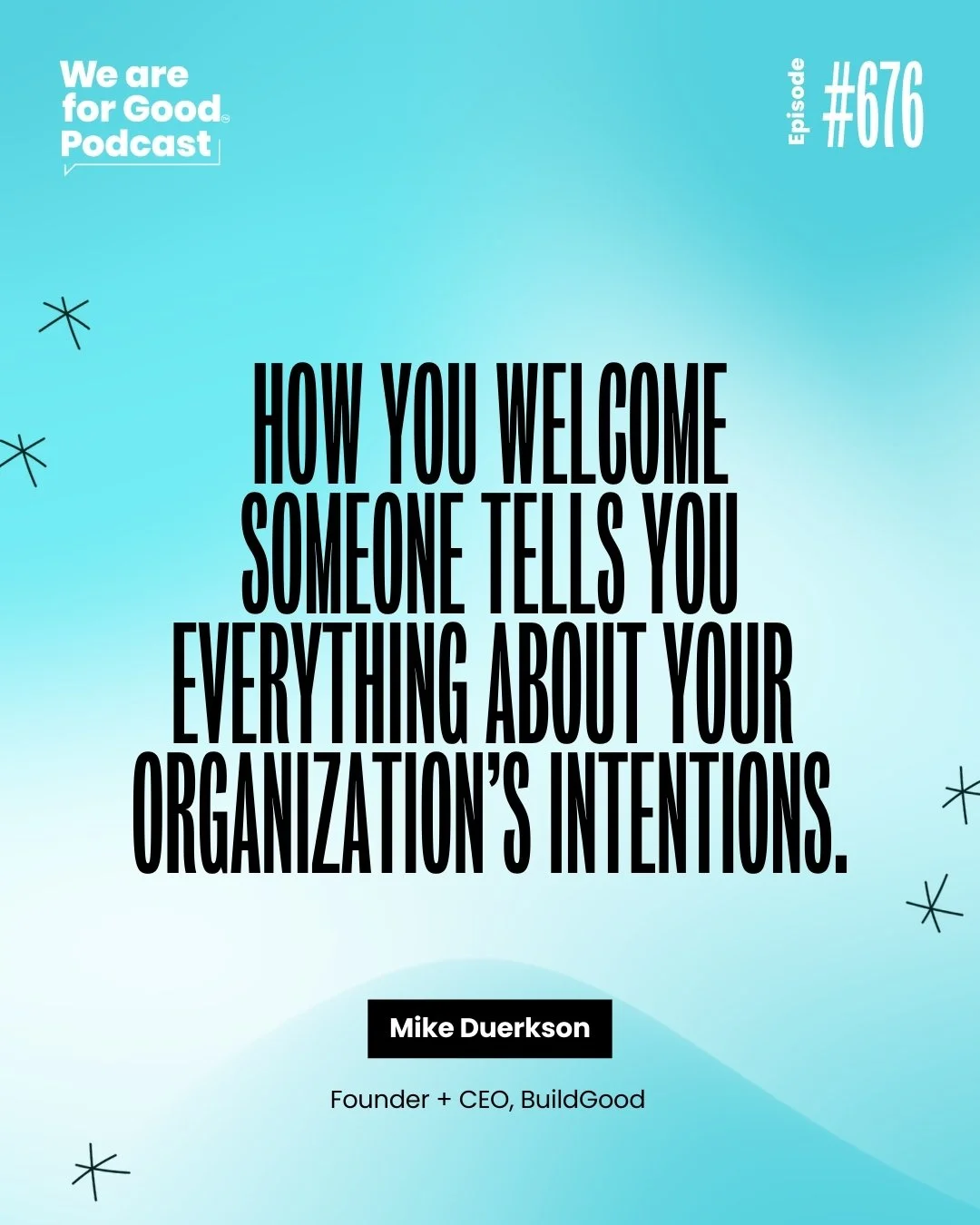
“Generosity still matters to people — it’s just not the social norm anymore.” — Mike Duerksen
“People don’t need more prompts to give. They need better experiences.” — Mike Duerksen
“Everybody wants recurring value from donors. Very few organizations provide recurring value first.” — Mike Duerksen
“We’re optimizing for the small percentage of people who give again quickly — and ignoring everyone else.” — Mike Duerksen
“After someone gives, your job is to celebrate generosity — not rush to the next ask.” — Mike Duerksen
“Donors talk to us in two ways: their behavior and what they tell us.” — Mike Duerksen
“If someone gives every year at Christmas, why are we pretending that’s random?” — Mike Duerksen
“The first seven days after a gift are a critical window — donors are deciding if they belong.” — Dana Snyder
“When donors are given the option to pause instead of cancel, more than 50% choose to pause.” — Dana Snyder
“An impossible goal forces focus — everything else becomes noise.” — Dana Snyder
“You can’t grow recurring giving if no one actually owns it.” — Dana Snyder
“Individual giving is a visibility game. It’s marketing.” — Dana Snyder
“If you want stability in the future, you have to design for it today.” — Dana Snyder
Dana’s One Good Thing
Set an impossible goal.
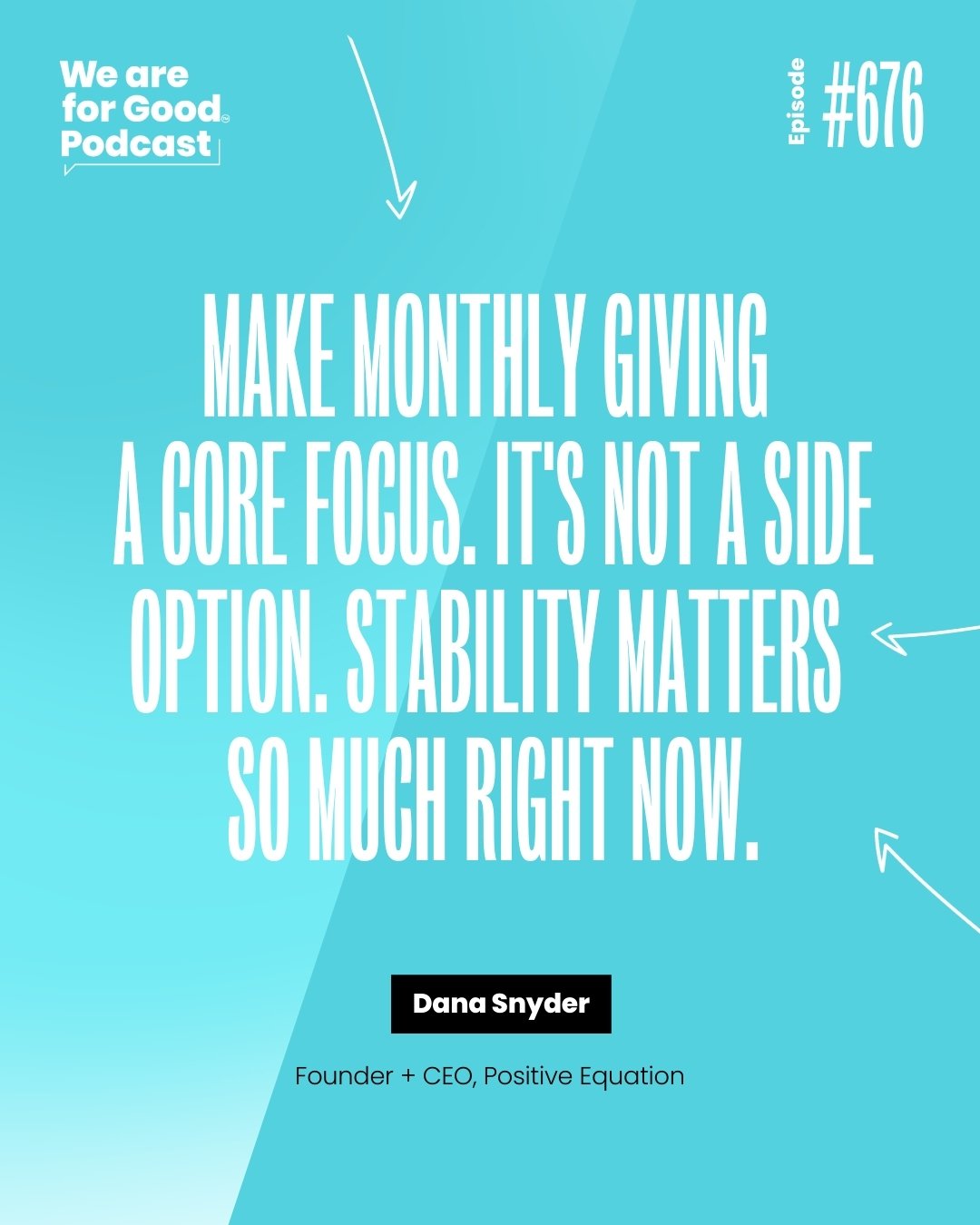
Let it create focus. When everything else falls away, what becomes possible?Make monthly giving the priority.
It’s not a side option — it’s a stability strategy in uncertain times.Audit friction.
Remove barriers in the donor journey, especially during onboarding.Build flexibility into retention.
When donors can pause instead of cancel, 50%+ choose to pause.
Mike’s One Good Thing
Experience giving like a donor.
Ask five friends (and yourself) to make a gift and share feedback from the first two weeks.Fix the “forgotten copy.”
Review confirmation pages, automated receipts, and welcome emails.Elevate the post-gift moment.
Celebrate generosity before asking again.Make generosity visible.
Normalize giving — and start by modeling it at home.
Connect with Mike
Connect with Dana
Connect with Jon
Connect with Becky
Come be part of the We Are For Good Community—totally free.
Join fellow changemakers, share takeaways from this working session, and keep collaborating in a space built for connection, inspiration, and real impact: www.weareforgoodcommunity.com
Say hi👇
LinkedIn / Instagram / Facebook / YouTube
Studio Selfie