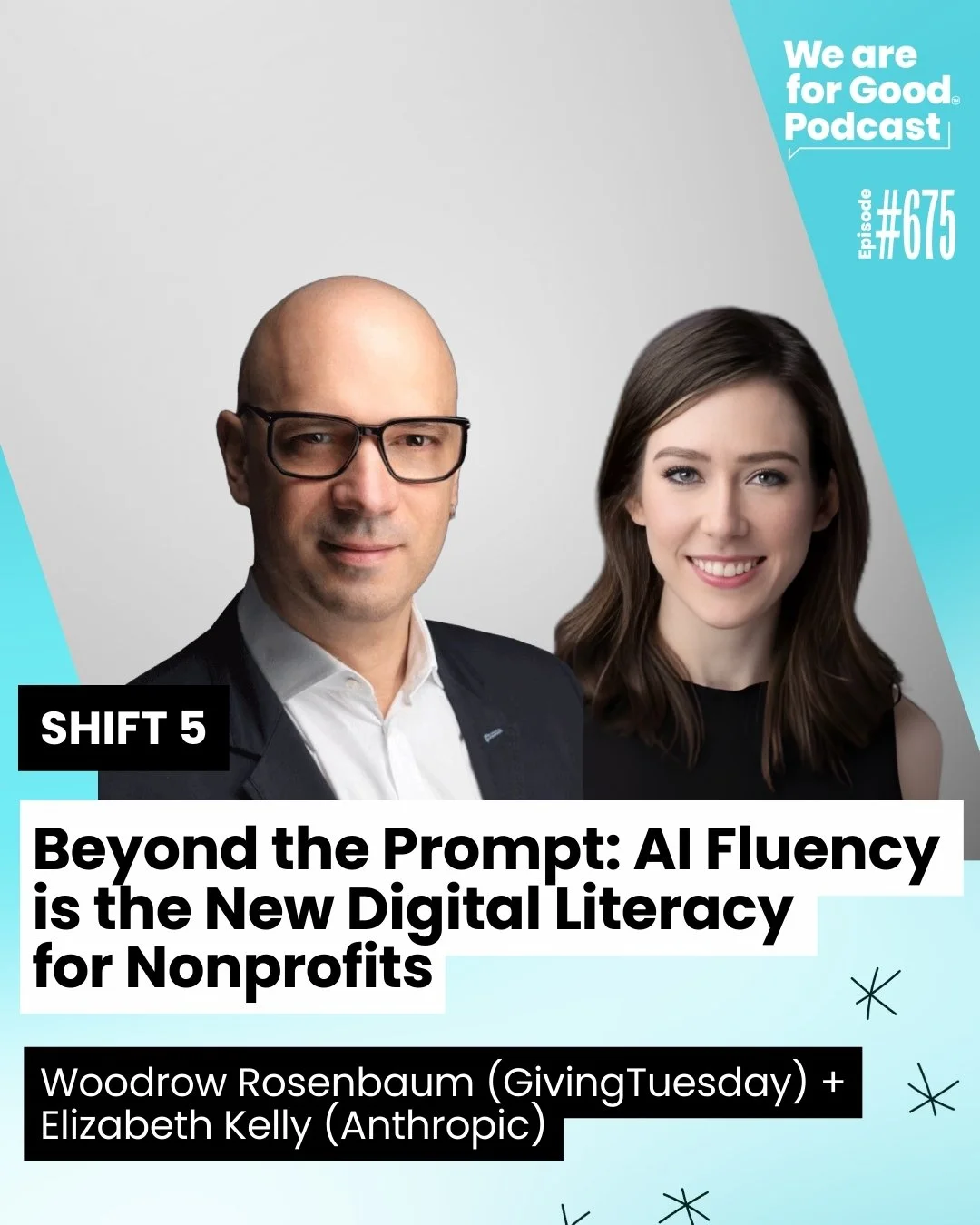
675. Shift 5 — Beyond the Prompt: AI Fluency is the New Digital Literacy for Nonprofits - Woodrow Rosenbaum, GivingTuesday + Elizabeth Kelly, Anthropic
Listen to this episode
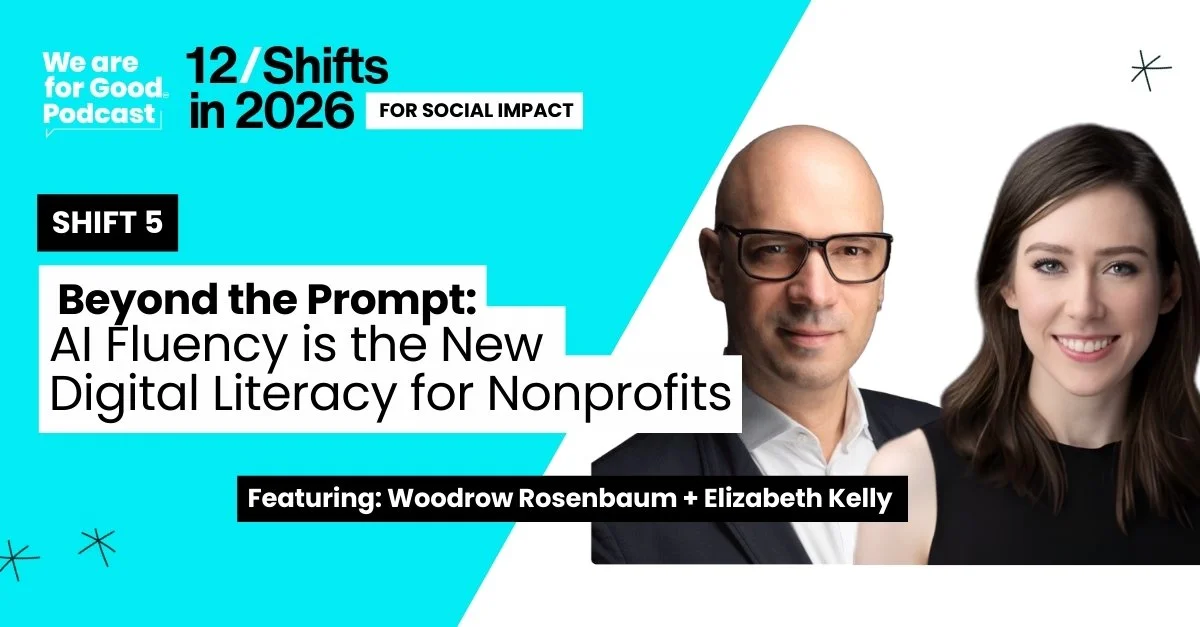

This episode is part of 12 Shifts in 2026 for Social Impact.
Overview
AI is everywhere right now and for a lot of nonprofit leaders, it feels equal parts exciting and overwhelming. In this episode, Woodrow Rosenbaum Chief Data Officer, GivingTuesday) and Elizabeth Kelly (Head of Beneficial Deployments, Anthropic) bring in a refreshing, human-first conversation about what it actually means to build AI fluency in the nonprofit sector.
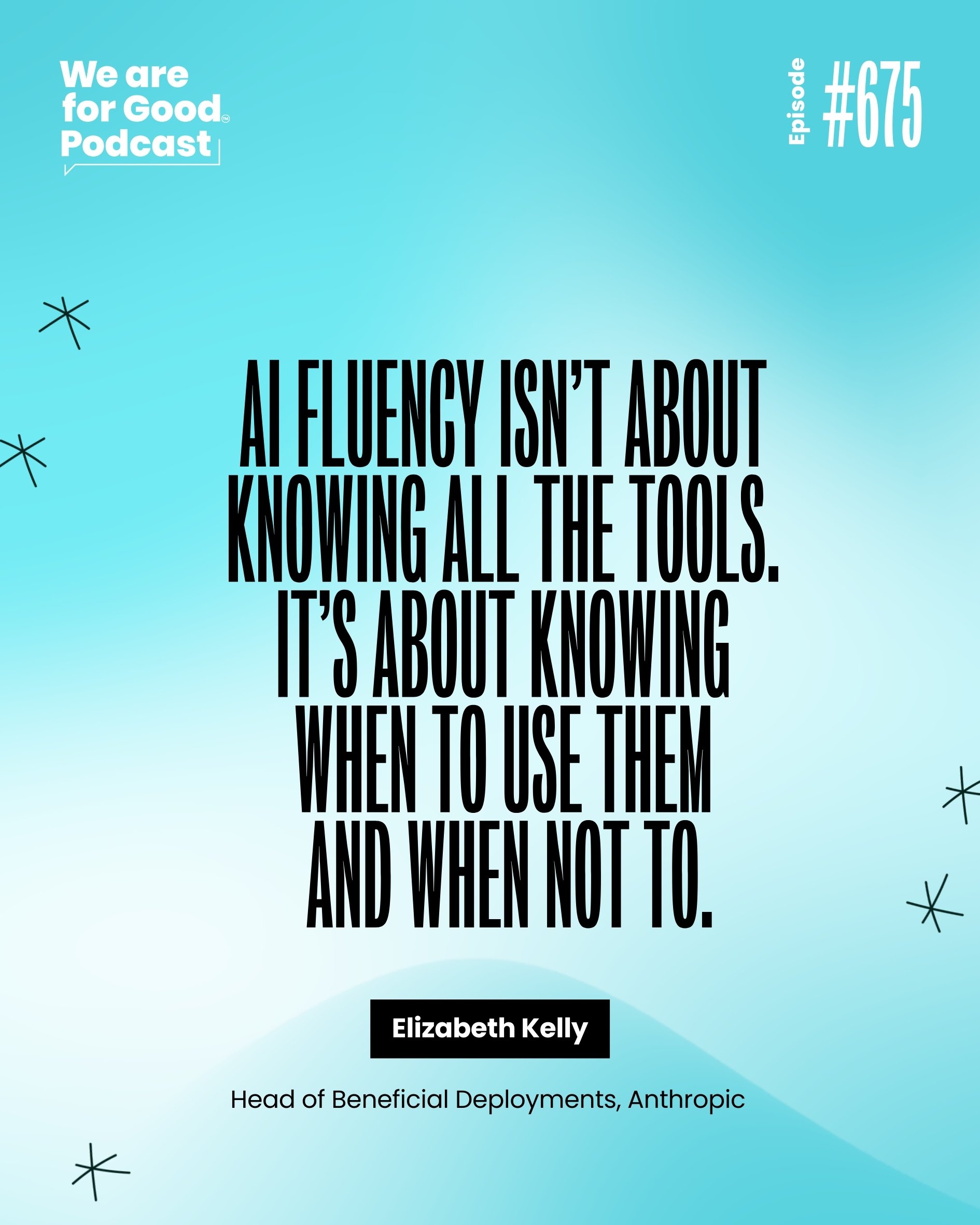
This isn’t about becoming a prompt expert or chasing the latest tool. It’s about learning when AI can help, when it can’t, and how to use it responsibly in ways that strengthen trust, decision-making, and mission impact. Together, they unpack why AI fluency is quickly becoming the new digital literacy and how nonprofits can move forward without fear, hype, or burnout.
You’ll walk away with practical insights on how to:
Shift from “should we use AI?” to “how do we use it responsibly and well?”
Build AI fluency as an organizational muscle, not a one-time training
Start small with AI by improving one painful workflow at a time
Put guardrails in place around privacy, bias, and human review
Avoid using AI just to do the same work faster and instead focus on better outcomes
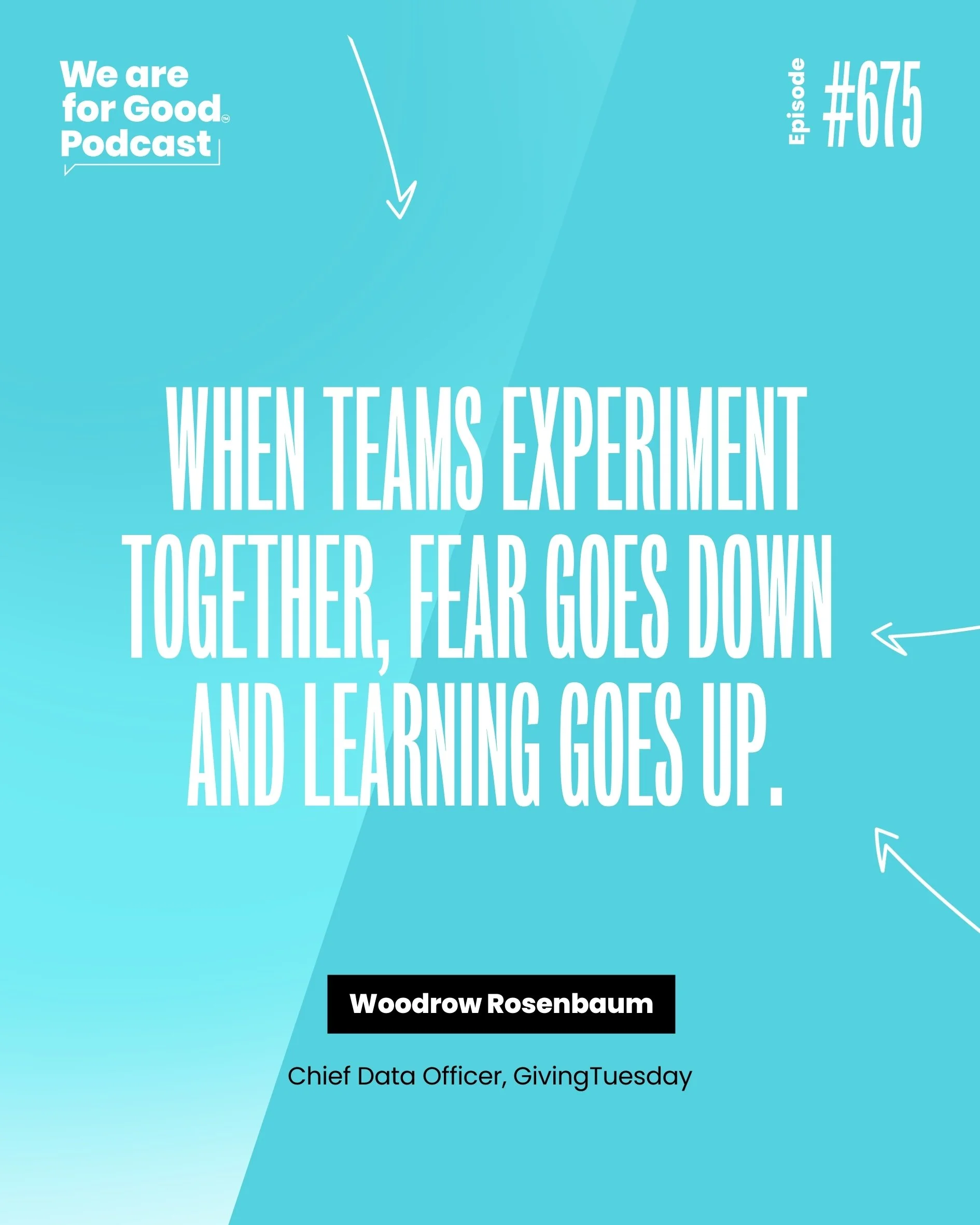
Create shared learning and trust so teams experiment without fear
If you’ve been waiting for permission to go slow, ask better questions, and lead with intention, this one’s for you.
Dive Deeper:
An AI Fluency Playbook for the Year Ahead
This isn’t about doing everything at once. It’s about learning on purpose.
Start small and specific.
Don’t begin with tools. Begin with a real problem your team feels every week.Choose one painful workflow.
Look for the task that drains time or energy and doesn’t require deep human nuance to get started.Run a short, low-risk experiment.
Try a two-week pilot with two or three curious team members. Keep it contained. Keep it safe.Pay attention to what actually changes.
Notice time saved, clarity gained, and where friction still shows up. Not everything needs to be measured to the minute, but learning should be intentional.Decide what’s worth scaling.
If it helped, expand thoughtfully. If it didn’t, that’s still a win. You learned something.Grow internal champions before going organization-wide.
People trust peers more than policies. Let early learners help shape what comes next.Don’t skip the governance conversation.
Get aligned early on where human review is essential, what data should never be shared, and who ultimately owns AI-supported outputs.
Building AI Fluency Through Shared Learning
Simple ways to put this into practice:
Create an AI learning circle where curiosity is encouraged and no one has to be the expert.
Normalize experimentation and sharing by inviting staff to try tools in different ways and talk openly about what worked and what didn’t.
Provide light technical support so someone can help with setup, guardrails, and questions, lowering the barrier for everyone.
“This isn’t about becoming an expert overnight. It’s about building comfort and curiosity over time.”
Episode Transcript
Download Full Episode Transcript Here
Episode Highlights
Understanding AI Fluency and Its Importance (02:17)
The Role of Data in Nonprofit AI Adoption (05:10)
Real-World Applications of AI in Nonprofits (07:40)
Launching Claude for Nonprofits (10:38)
Building Trust and Responsible AI Use (13:24)
Governance and Oversight in AI Implementation (16:27)
Elizabeth + Woodrow One Good Thing (22:54)
Powerful Quotes
“We’re a very data driven company at Anthropic. We’ve seen this shift from "should we use AI” to “how do we use it responsibly?” -Elizabeth Kelly
“It’s no surprise that funders are starting to expect that nonprofits they invest in are using AI.” -Elizabeth Kelly
“Responsible use means being honest about limitations.” -Elizabeth Kelly
“We don’t need nonprofits chasing hype. We need them making thoughtful, mission-aligned choices.” - Woodrow Rosenbaum
“The real opportunity is using AI to give people back time, not just increase output.” - Woodrow Rosenbaum
“AI works best when it supports human decision-making, not when it replaces it.” - Woodrow Rosenbaum
“If AI is going to support mission-driven work, values have to come first, not last.” - Elizabeth Kelly
“Trust is built by being clear about where AI fits and where humans stay firmly in the loop.” - Elizabeth Kelly
Elizabeth’s One Good Thing (25:00):
Pick one small, repeatable task that quietly eats up your time and try it with Claude. No overhaul required. AI fluency grows by improving one real workflow at a time.Woodrow’s One Good Thing (26:00):
Start a simple conversation. Ask a coworker what they’ve tried with AI that was useful, fun, or even a little funny. Shared learning lowers the stakes and builds confidence faster than any training ever could.
Connect with Woodrow
Connect with Elizabeth
Connect with Jon
Connect with Becky
Come be part of the We Are For Good Community—totally free.
Join fellow changemakers, share takeaways from this working session, and keep collaborating in a space built for connection, inspiration, and real impact: www.weareforgoodcommunity.com
Say hi👇
LinkedIn / Instagram / Facebook / YouTube
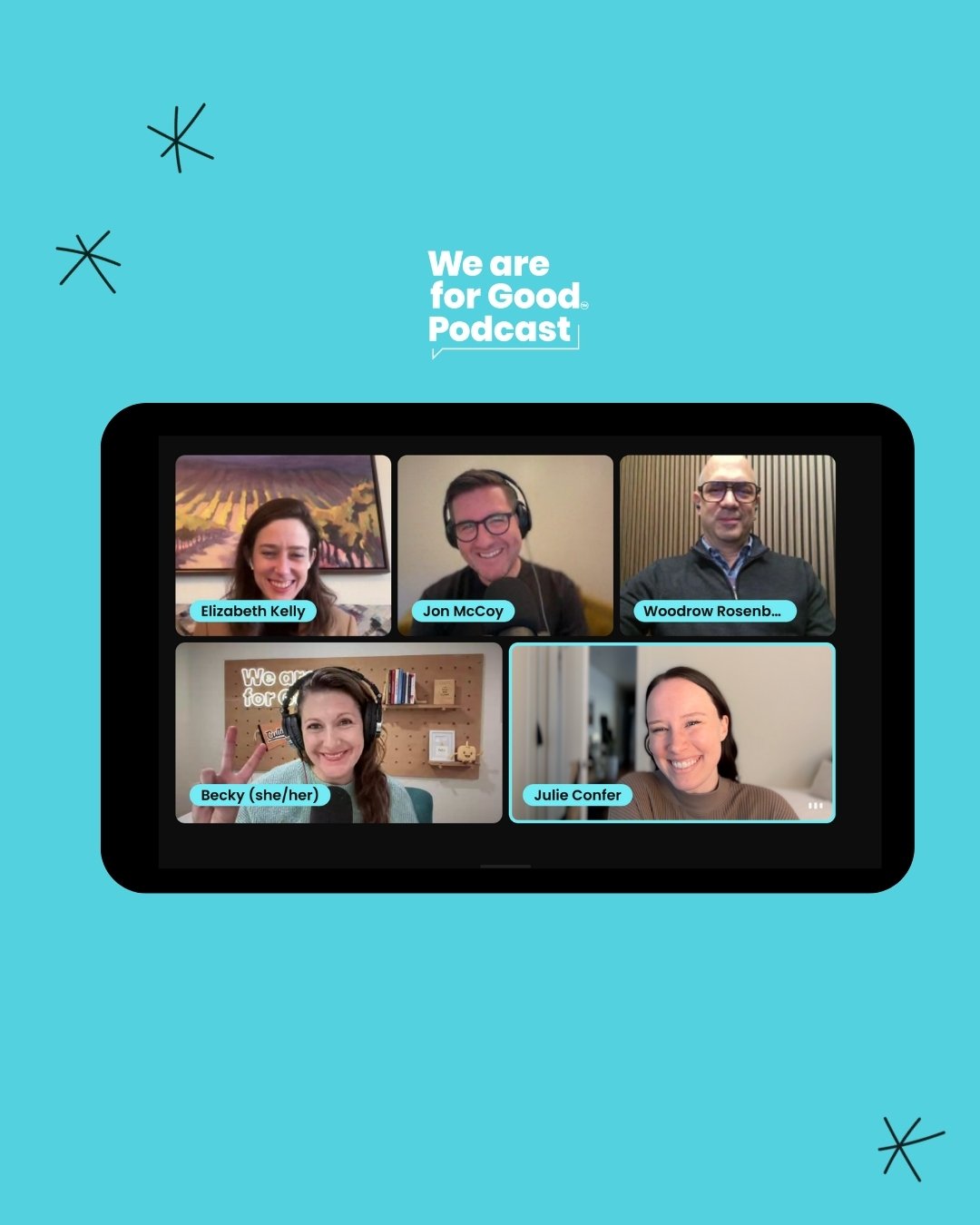
Studio Selfie