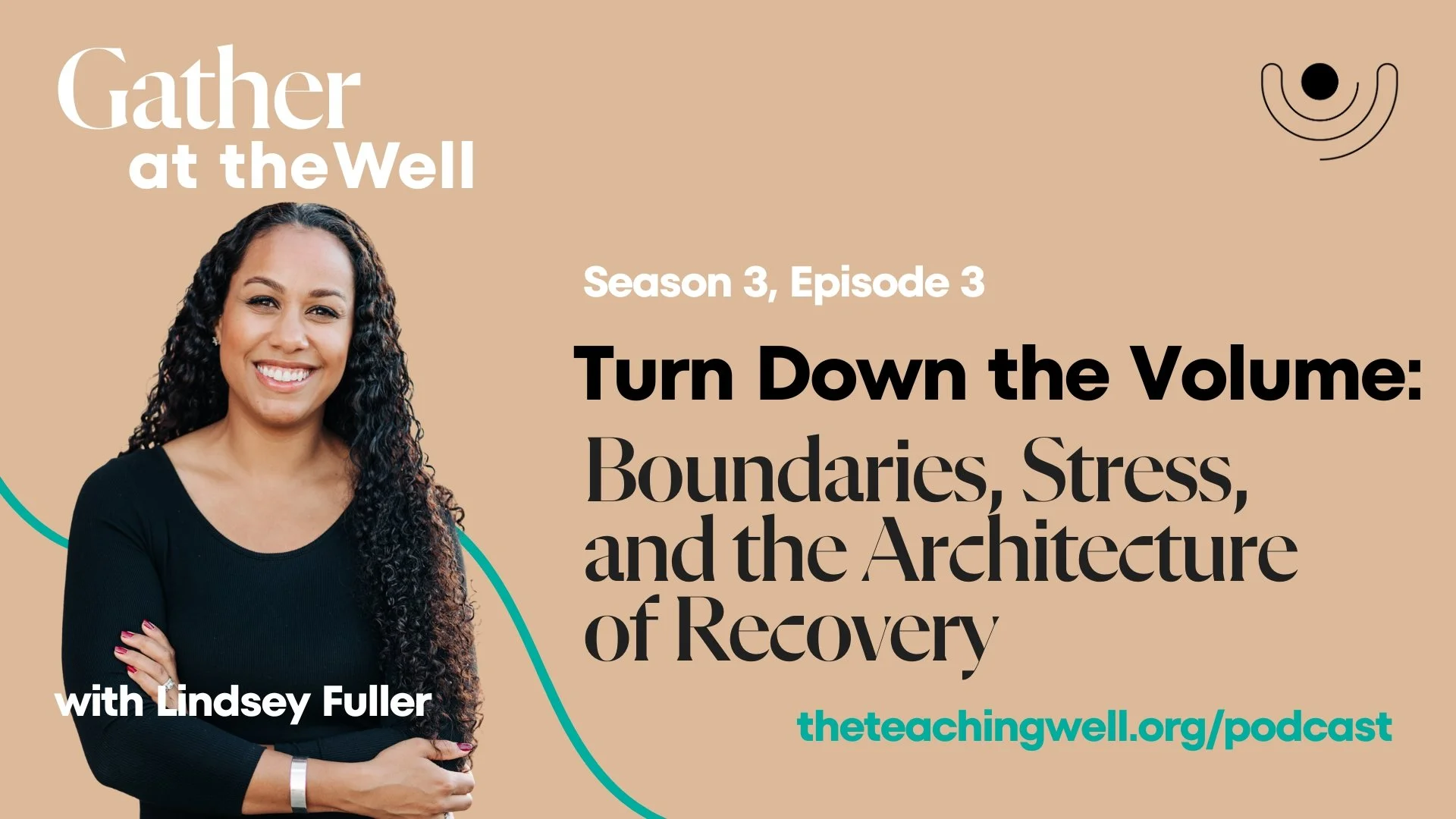
S3E3: Gather at the Well: Turn Down the Volume - Boundaries, Stress, and the Architecture of Recovery (Lindsey Fuller)
Listen to this episode

Overview
Turn Down the Alarm, Tune Into the Signal.
That feeling of stress isn't a sign you're broken—it's your body's brilliant security system asking for your attention. It's a powerful signal that, when truly heard, guides you directly to deeper self-care and genuine resilience.
That nagging feeling of stress? It's simply your nervous system alarm stuck on full blast. It isn't a failure; it’s a profound signal gently inviting you to tend to your deepest needs.
Step in with us to embrace the art of regulation, not resistance. Lindsey shares her comforting guidance on how to actively turn down that volume and truly tune into your body’s quiet wisdom. You'll learn to craft healthy boundaries—those kind, firm limits that protect your precious energy and bring immediate calm to your system.
Ready to find your ease and greater inner awareness? Tune in for the journey 🧘♀️
You’ll hear:
Understanding stress as a natural security system rather than a flaw
How to set and maintain healthy boundaries for personal well-being
Techniques for aligning self-care practices with actual needs
The importance of listening to your body's cues to prevent burnout
Strategies for transforming stress into a learning opportunity
Key Takeaways
Stress is a natural part of our body's security system, designed to alert and protect us
Healthy boundaries are essential for sustainable compassion and personal well-being
Self-care should be aligned with actual needs rather than habitual practices
Listening to your body's cues can help prevent burnout and promote resilience
Awareness and agency are crucial in managing stress effectively
Affirmations
I honor my body's security system. It's trying to keep me safe
I can turn down the volume and still trust the signal
My boundaries protect my peace and preserve my presence
I'm learning to listen before I break
📝 Your Well-being Warrior Homework
Grab Your Tool: Get a piece of paper (yes, even the back of a bill works!) and something to write with.
Scan and Listen: Sit still for a moment and scan your body and mind. Tune into any areas that are communicating tension or stress. (If needed, re-do the "turning down the volume" body scan from the episode).
Identify the Stress Signal: Note one to three specific areas of your body or brain where stress is presenting (e.g., tight shoulders, racing thoughts, clenching jaw). Optional: Draw a stick figure and circle these areas.
Open Your Schedule/Self-Care Stash: Look at your calendar or check your drawer for hoarded self-care gift cards/vouchers.
Align Your Care: Match one of the presenting stress needs from your notes to an upcoming self-care appointment or activity.
If you have a match: Pat yourself on the back!
If your scheduled care doesn't align with your cue: Add a new, responsive Self-Care Act to your calendar within the next seven days that directly addresses the need you identified (e.g., if your shoulders are tight, schedule 15 minutes of dedicated stretching).
Reflect and Commit: Use these prompts to give yourself permission to be responsive to your recovery requests:
What does my body need today that my mind might be ignoring?
How can I align my care to the actual need, not just my habits of self-care?
What would it look like to create a rhythm of rest that feels like home?
Today’s Speaker
Lindsey Fuller, Executive Director of The Teaching Well
Rebecca Bernard, Director of Innovation The Teaching Well
“Your brain and body are doing exactly what they’re meant to do. Alert you, protect you.”
Episode Transcript
Download Full Episode Transcript Here
Episode Highlights
Reframing Stress: Stress as a sign of unmet needs; introduction to boundaries and the importance of self-care (02:25)
Somatic Scan: Turning the Volume Down (3:20)
The Science of Stress (11:00)
Utilising Boundaries for Peace (13:10)
Rebecca Somatic Movement Practice (17:24)
Self-Study to Interpret and Regulate Stress (22:13)
Revenge Procrastination (25:00)
Self-Care as a Conversation (30:00)
Resetting the Alarm (31:32)
Closing: Practice of turning down stress, micro-dosing wellness, and fostering a rhythm of rest (33:02)
Powerful Quotes
"Your inner house becomes a refuge again, not just for you, but for the people you pour into every day." - Lindsey Fuller
“The work is learning how to reset the alarm, y'all." - Lindsey Fuller
"Self-study is how you learn to listen in a language that your body actually speaks." - Lindsey Fuller
"When you listen with compassion instead of judgment, you start to see the truth." - Lindsey Fuller
"The goal isn't to silence the alarm forever. It's to know when it's been tripped." - Lindsey Fuller
“Your brain and body's relationship to stress, it's like a home security system." - Lindsey Fuller
"Stress isn't a flaw, but a signal that can guide us." - Lindsey Fuller
"Boundaries are the architecture that hold your peace." - Lindsey Fuller
"Real well-being is about alignment, not perfection." - Lindsey Fuller
"I want to learn to manage stress, not have stress managing me."- Linsdey Fuller
Connect with Lindsey
Connect with Jon
Connect with Becky
Connect with We Are For Good
Become a Member of the Impact Uprising
If you liked this conversation, you’ll love what’s happening inside our premium membership + community - become a member of the Impact Uprising today.
Get access to a fully searchable library of content, community, private podcast and more. Go to weareforgood.com - meet friends and get unstuck today.
Say hi👇
LinkedIn / Instagram / Facebook / YouTube / Twitter