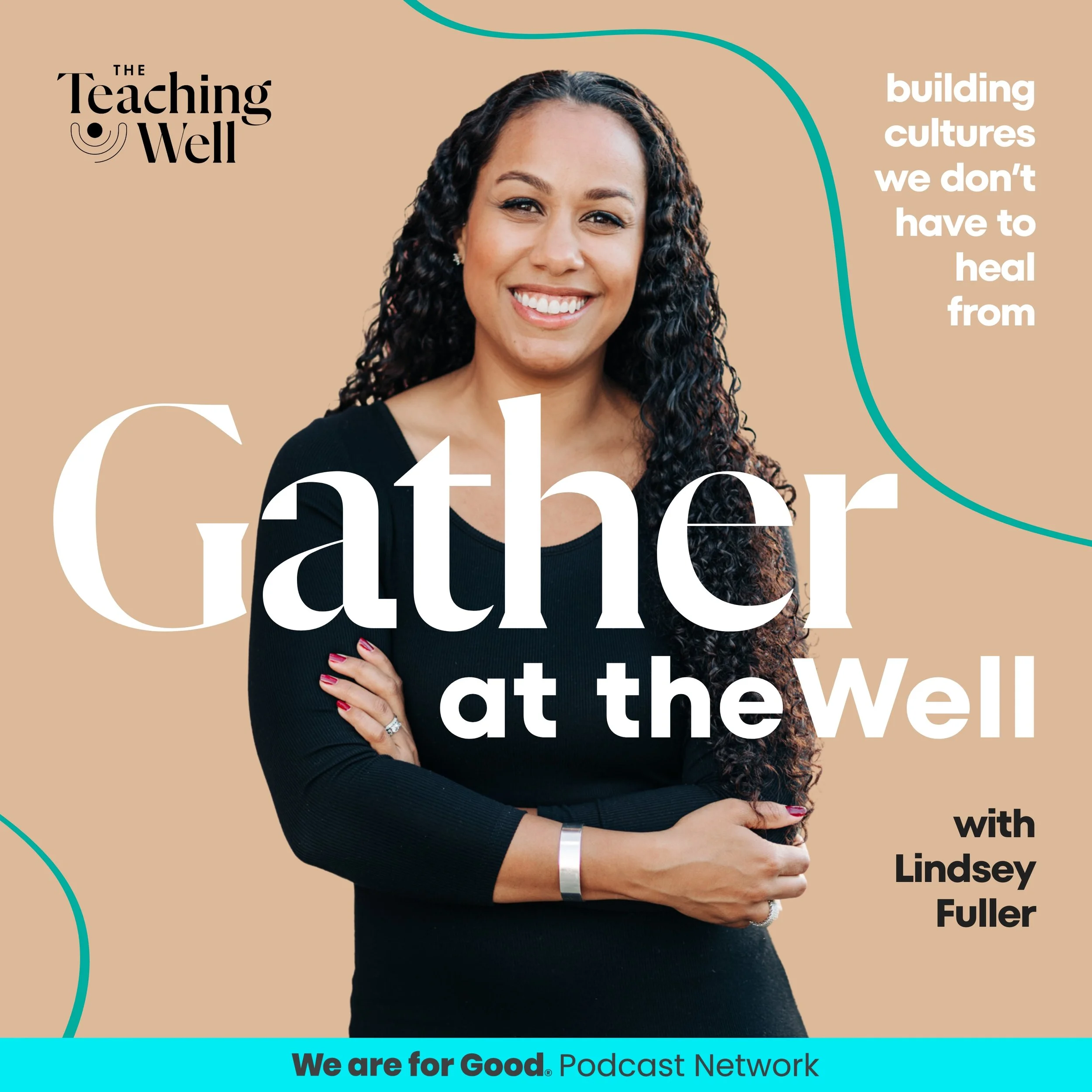
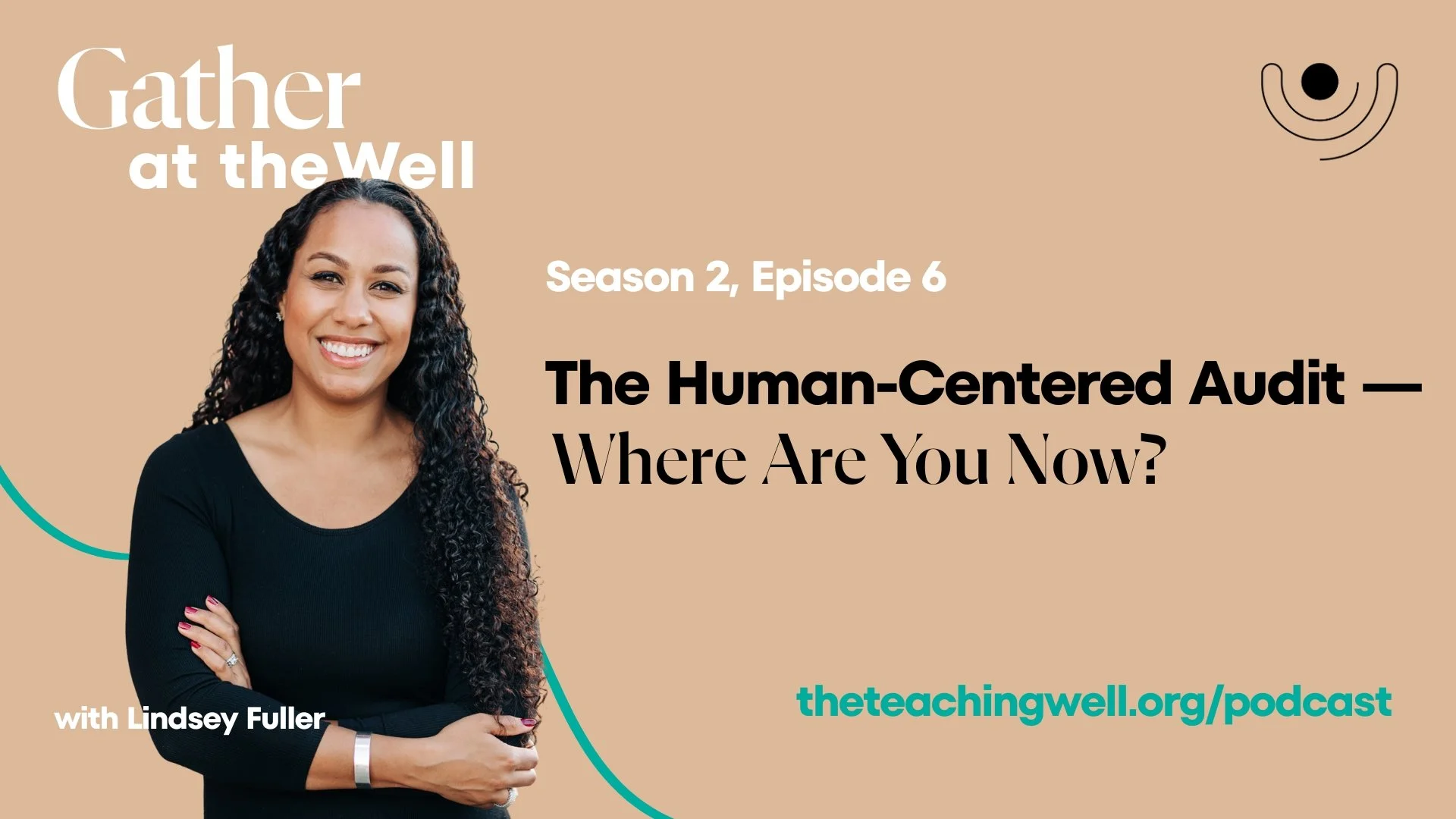
Gather at the Well: Season 2 Episode 6 | The Human-Centered Audit—Where Are You Now? (Lindsey Fuller)
Listen to this episode

Overview
What if policies could actually feel like care? 💛
In this episode of Gather at the Well, Lindsey Fuller invites us to rethink how we show up for our teams. Through the policies we write and live by. Drawing from her own experience, Lindsey unpacks the evolution of her organization’s “corrective progression” policy, showing how even the trickiest processes can be reimagined as tools for growth, not punishment.
With heart and practicality, she introduces a simple but powerful framework that places every policy into one of three buckets: care, conditions, and corrections. You’ll hear why listening deeply, surveying your team, and designing policies rooted in trust can shift your culture from reactive to restorative.
Come for the insights, stay for the breathwork 🧘—this episode is a reminder that policies don’t have to be dusty documents. They can be living, breathing reflections of the kind of workplace we’re all trying to build.
Affirmations:
"One step at a time is enough for me."
"I am worthy of healing centered policies."
"We deserve policies that help not harm."
"I am brilliant."
"I can lead this effort."
Takeaways:
Human-centered policies are essential for organizational success.
Structure in organizations can prevent burnout and promote collaboration.
Policies should be clear and supportive, not punitive.
Organizations must create conditions that work for their staff.
Middle management plays a crucial role in implementing human-centered policies.
Each policy should be living document that evolves with the organization.
Today’s Speaker
Lindsey Fuller, Executive Director of The Teaching Well
“If you hold things in, you’ll get sick. ”
Episode Transcript
Download Full Episode Transcript Here
Episode Highlights
Understanding Corrective Progression (01:21)
The Importance of Structure in Organizations (04:37)
Implementing Corrective Progression Policies (10:01)
Building Resilient Organizations (15:05)
The Cost of Human-Centered Policies (20:57)
Categories of Human-Centered Policies (25:05)
Engaging Staff in Policy Development (31:36)
Powerful Quotes
“Folks want to work for orgs that work for them.” - Lindsey Fuller
“Your budgets communicate your priorities and your policies are an extension of your protection.” - Lindsey Fuller
“If you’re giving your all to a company that can’t even return basic care, we’re out of balance.” - Lindsey Fuller
“Let these people go home and still have something for their families.” - Lindsey Fuller
“Community building beyond happy hour is critical.”- Lindsey Fuller
“Middle management gets bad representation, they’re a key lever in generating, establishing and upholding human-centered policies.”- Lindsey Fuller
“Policies are living and fluid.”- Lindsey Fuller
Connect with Lindsey
Connect with Jon
Connect with Becky
Connect with We Are For Good
Become a Member of the Impact Uprising
If you liked this conversation, you’ll love what’s happening inside our premium membership + community - become a member of the Impact Uprising today.
Get access to a fully searchable library of content, community, private podcast and more. Go to weareforgood.com - meet friends and get unstuck today.
Say hi👇
LinkedIn / Instagram / Facebook / YouTube / Twitter