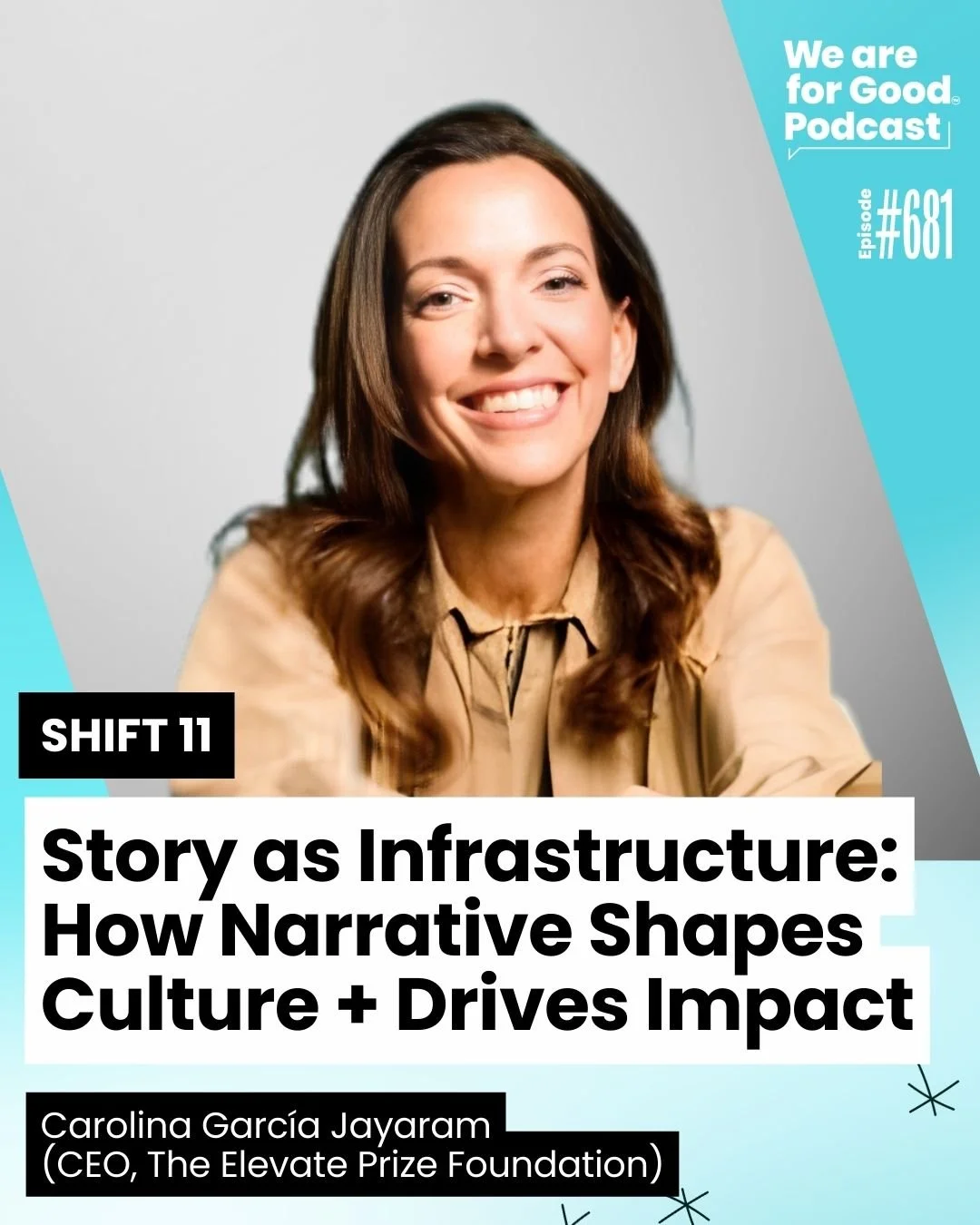
681. Shift 11 — Story as Infrastructure: How Narrative Shapes Culture + Drives Impact - Carolina García Jayaram
Listen to this episode
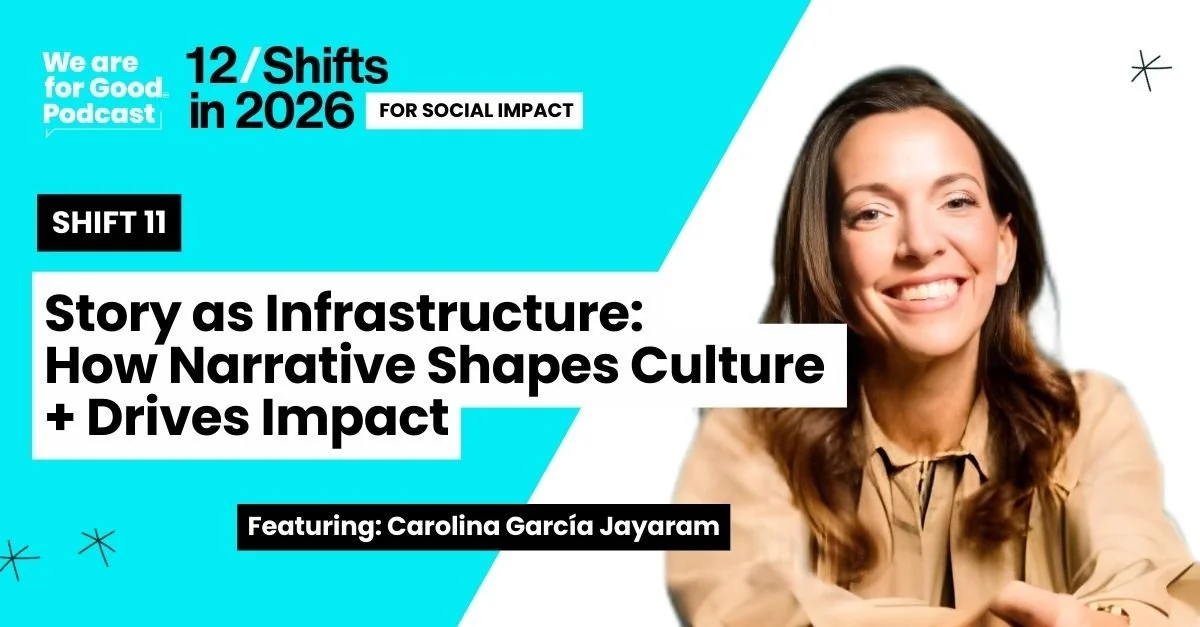
This episode is part of 12 Shifts in 2026 for Social Impact.
Overview
Today's episode continues our 12-part series: 12 Shifts in 2026 for Social Impact. Over twelve episodes, we’re unpacking mindset + strategy shifts shaping the future of fundraising, leadership, and doing good in 2026. Explore the series at weareforgood.com/12shifts.
Shift 11 / Story as Infrastructure
In today’s episode, Jon and Becky welcome Carolina Garcia Jayaram, CEO of the Elevate Prize Foundation, for a reflective and forward-looking conversation on why story is no longer a communications tool — it’s essential infrastructure for mission and culture.
As attention fragments, trust erodes, and technology reshapes how people connect, Carolina invites nonprofit leaders to rethink storytelling as a relational practice rooted in humanity, proximity, and long-term investment. Together, they explore how centering people over issues, building trust-based relationships, and intentionally distributing stories can expand influence without sacrificing integrity.
Carolina shares insights from Elevate’s work at the intersection of philanthropy, media, and culture — from scaling visibility for proximate leaders to embracing AI in ways that deepen creativity rather than replace it. This episode is both a mindset shift and a practical invitation for leaders ready to treat story as something to protect, resource, and evolve from the inside out.
Takeaways:
Story is core infrastructure, not a marketing function.
People move people — human stories drive trust and action.
Trust and relationships unlock the most powerful narratives.
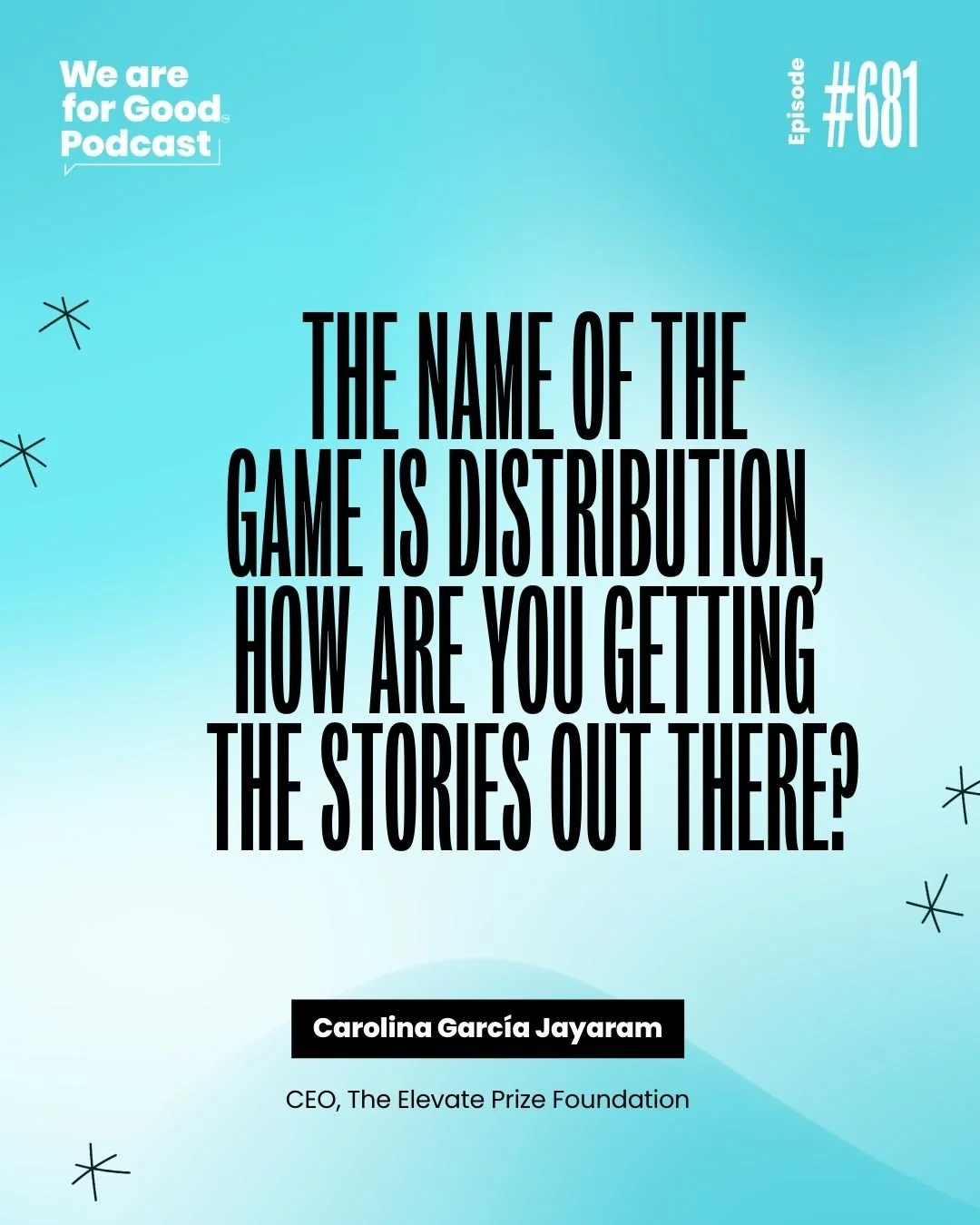
Distribution determines reach; storytelling is a strategy choice.
Systems and iteration are what allow story to scale.
Building Storytelling Infrastructure
Start with the Why
Clarify why you’re telling the story — fundraising, partnerships, influence, talent, or trust-building.
Define who you’re trying to reach, especially audiences beyond your current supporters.
Let the objective shape the story, not the other way around.
Build the Right Systems
Create a story or content library connected to the programs and leaders you’re highlighting.
Decide where this content lives so it can be easily accessed, reused, and built upon over time.
Use Campaign Briefs to Create Consistency
Every story needs a brief that defines the audience, goal, perspective, and distribution strategy.
Briefs help storytelling feel intentional rather than random and create a recognizable cadence.
Pay attention to the hooks and elements audiences return to — tone, framing, opening lines, visuals.
Evaluate What Worked (and What Didn’t)
After each story or campaign, conduct an honest postmortem.
Ask: Did we reach the right audience? Did this meet our objective? What should we change next time?
Treat storytelling as a learning practice, not a one-time success or failure.
Keep the Tools Simple
Your phone can be your most powerful storytelling tool.
Invest in the basics: a small microphone, a simple light, and a phone holder — small costs that elevate quality.
Use accessible tools like Canva or DaVinci Resolve for low-cost, high-impact editing.
Own Your Distribution
Don’t be afraid to start your own YouTube channel and treat it as a long-term investment.
Make distribution a strategic choice — where your story lives matters as much as the story itself.
Signal internally and externally that storytelling is a priority by showing up consistently.
“Storytellers really need to think about who they are trying to reach. Partner with content creators who have really big followings.”
Episode Transcript
Download Full Episode Transcript Here
Episode Highlights:
People Over Issues: What Actually Moves Audiences to Action (03:45)
Trust → Relationship-Based Philanthropy (05:10)
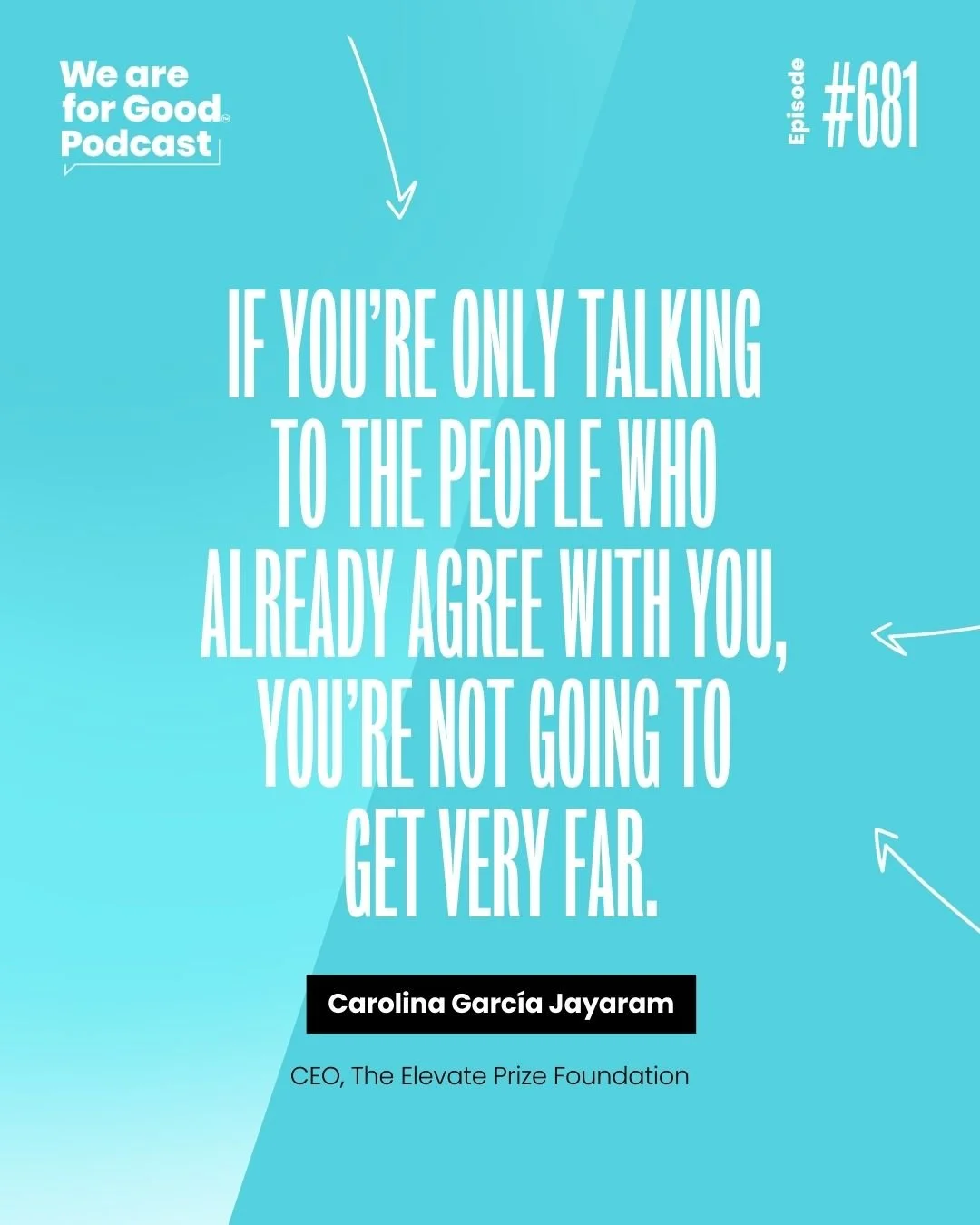
Distribution as Strategy: Reaching Beyond the Choir (07:20)
Owning Platforms & Visibility (YouTube, Creators, Times Square) (08:45)
Case Study: Scaling Impact Through Story — Hannah Freed & Democracy Defenders (11:00)
Scaffolding Stories: Why Nothing Should Be One-and-Done (14:50)
Building Story Systems: Briefs, Libraries, and Iteration (16:30)
Low-Fi Tools That Make High-Impact Stories Possible (18:40)
Visibility = Fundraising: What the Data Shows (20:30)
AI, Creativity & Neurodiversity: Scaling Without Losing Humanity (23:35)
Carolina’s One Good Thing (25:50)
Powerful Quotes
“Story is not a nice-to-have. It’s not an afterthought. It’s the whole shebang.” — Carolina García Jayaram
“People care about people more than they care about the issue.” — Carolina García Jayaram
“Story isn’t the earrings you put on at the end of the outfit — it’s the outfit.” — Carolina García Jayaram
“You can’t change culture or behavior if people don’t connect with the story.” — Carolina García Jayaram
“Trust takes time. There’s no shortcut to getting to the vulnerable, human story.” — Carolina García Jayaram
“I don’t just believe in trust-based philanthropy — I believe in relationship-based philanthropy.” — Carolina García Jayaram
“Distribution is strategy. Where your story shows up determines who it reaches.” — Carolina García Jayaram
“Visibility equals fundraising — we no longer have any doubt about that.” — Carolina García Jayaram
“AI can do a lot of the doing so humans can return to the being.” — Carolina García Jayaram
“Play with how and where you are showing up, and it is an investment.” -Carolina García Jayaram
Carolina’s One Good Thing: Carve out some time with their teams, do a lunch and learn, and start play with AI. (26:00)
Connect with Carolina
Connect with Jon
Connect with Becky
Come be part of the We Are For Good Community—totally free.
Join fellow changemakers, share takeaways from this working session, and keep collaborating in a space built for connection, inspiration, and real impact: www.weareforgoodcommunity.com
Say hi👇
LinkedIn / Instagram / Facebook / YouTube
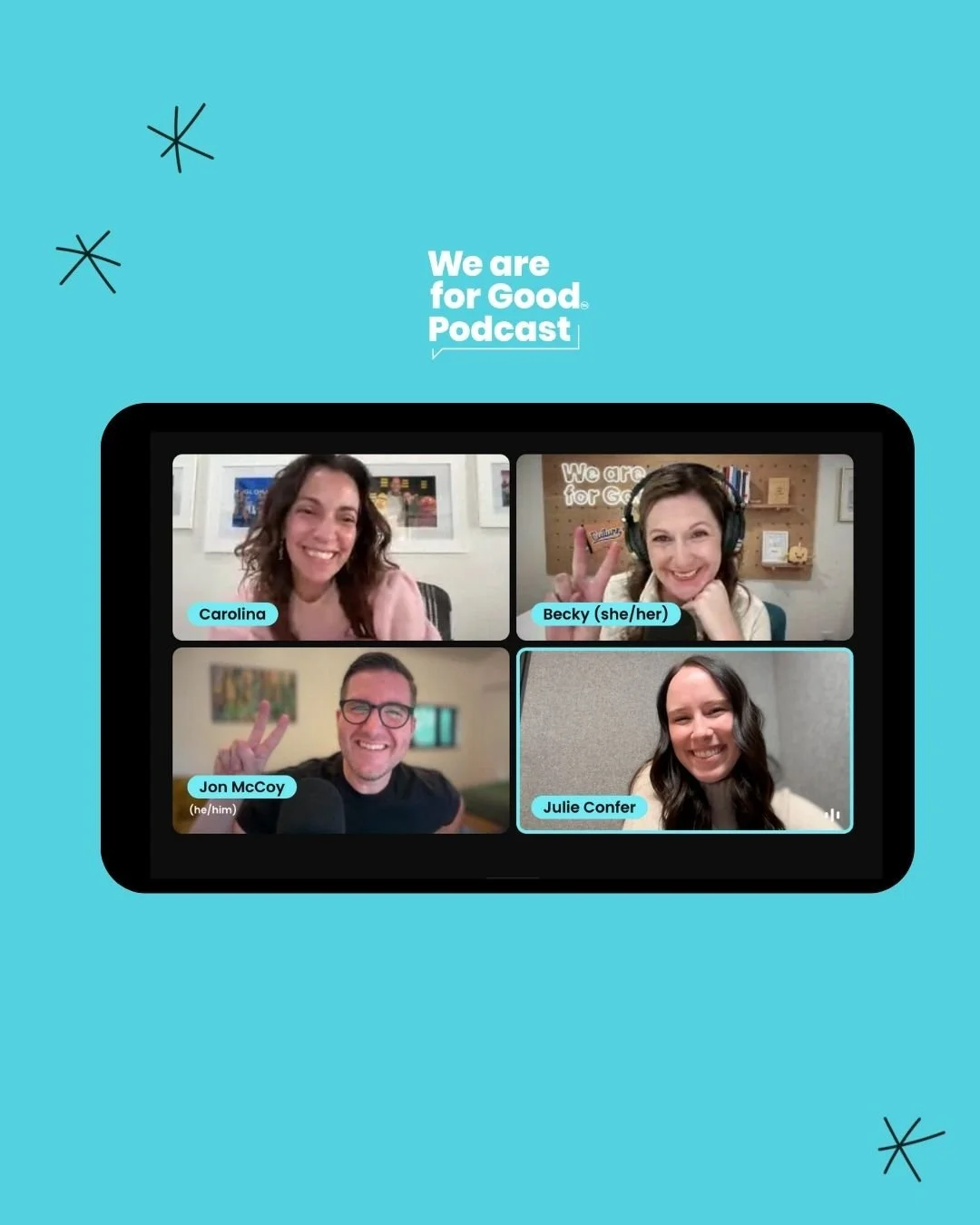
Studio Selfie