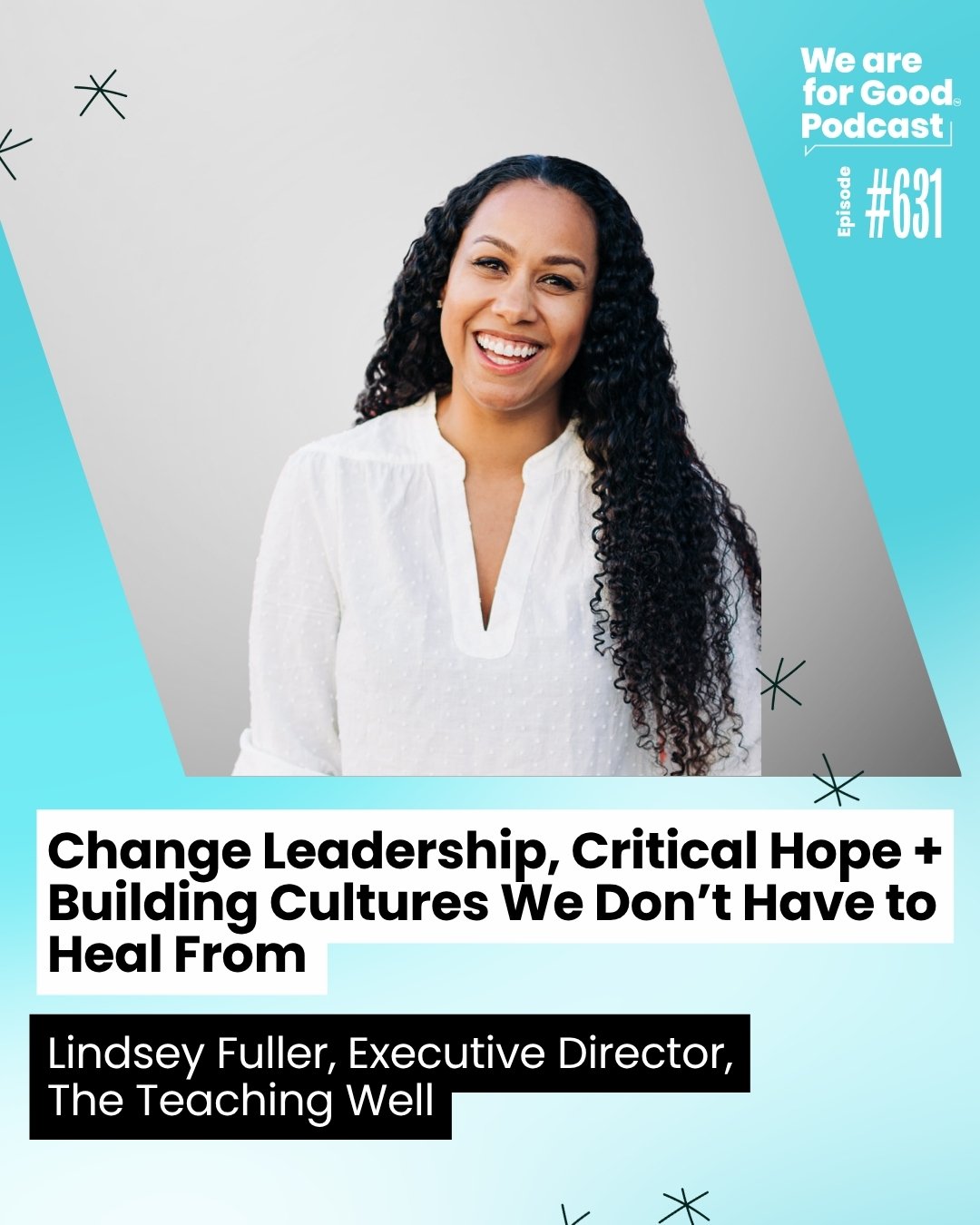
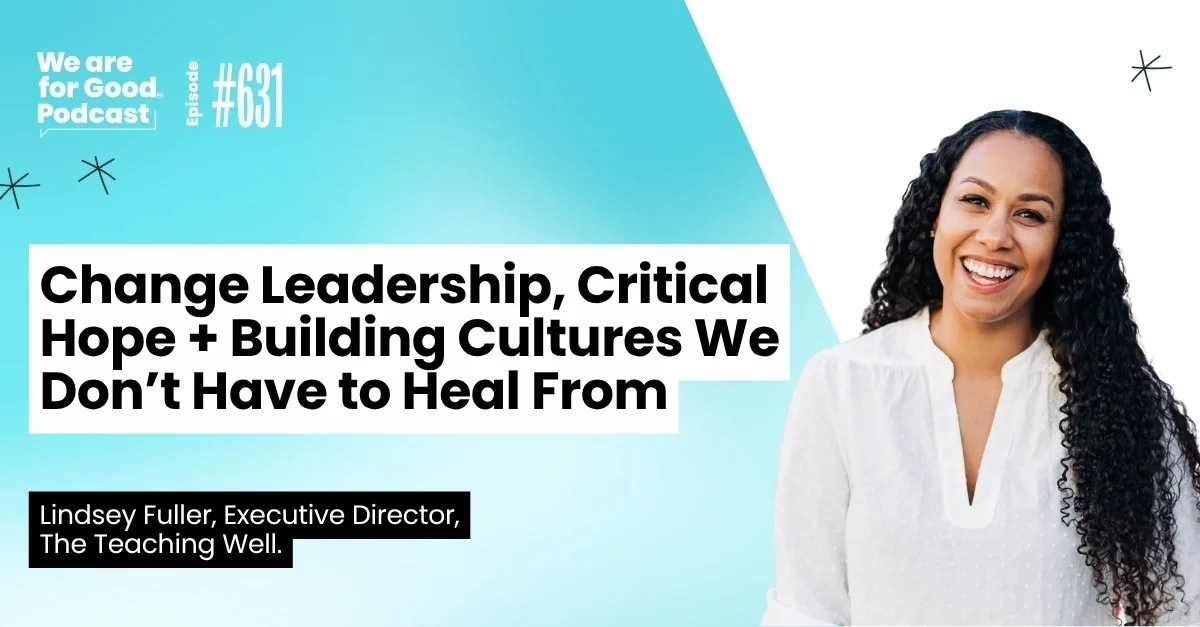
631. Change Leadership, Critical Hope + Building Cultures We Don’t Have to Heal From (Lindsey Fuller)
Listen to this episode

Overview
We’re closing out this series with a powerful conversation that redefines what leadership can look like. Lindsey Fuller of The Teaching Well joins us to explore how leading with courage starts right where you are—not with a title, but with intention.
We unpack big ideas: hope as a daily practice, resilience as a rhythm, and policies that reflect lived experience—not just words on a page.
Lindsey challenges us to rethink what tools truly sustain leadership—like rest, offboarding, and sabbaticals—and why they’re not extras, but essentials. We also name the often-unspoken reality of compassion fatigue and offer a vision of shared leadership grounded in alignment, not replication.
If you're ready to build a culture that centers humanity, care, and courage—this episode is your invitation to begin.
Learn:
Learn why human-centered leadership means choosing courage over comfort
Discover how critical hope is a practice—not a personality trait
Understand why change leadership begins right where you are—even without the title
Investing in self-care is essential for leaders.
Explore what it means for policies to be living, responsive, and rooted in lived experience
See how resilience is built through consistent, intentional rhythms
Unpack why rest, offboarding, and sabbaticals are essential leadership tools—not perks
Learn how shared leadership depends on calibration, not cloning
Recognize why compassion fatigue is a real occupational hazard—and what to do about it
Today’s Guest:
Lindsey Fuller | Executive Director, The Teaching Well.
“It’s easier to complain. It’s significantly easier to be a culture keeper.”
Episode Transcript
Download Full Episode Transcript Here
Episode Highlights
The Importance of Critical Hope (05:00)
Policies as Culture in Action (08:55)
Reframing Policies for Human-Centered Organizations (09:01)
5-Part Framework and Where People Get Stuck (15:00)
Challenges in Implementing Human-Centered Policies (14:53)
Human-Centered Leadership (25:00)
The Role of Feedback in Leadership (27:51)
Becoming the Change Leader in Your Team (30:00)
The Journey of Rest and Leadership (32:11)
Reflections from the Well (33:00)
Powerful Quotes
“It’s easier for me because it’s the only definition of leadership I’ve known. It’s built from many examples of non-leadership—I’ve seen people abuse power.” – Lindsey Fuller
“They taught me exactly who I do not want to be. So what’s the antidote to that?” – Lindsey Fuller
“Create realistic, small, feasible wins.” – Lindsey Fuller
“Is there space and capacity for policy work to be a priority? How many years will you go without it being one?” – Lindsey Fuller
“There’s typically an outlier—someone unapologetic about getting what they want and need. If you don’t train your people managers, you’ll have a glaring example of someone taking advantage of the policy, and a bunch of others who don’t. Resentment is one of the most toxic emotions to weave into your culture. Fairness matters.” – Lindsey Fuller
“Hope isn’t just soft—it’s strategic and steadying.” – Lindsey Fuller
“Policies aren’t paperwork—they’re expressions of your values.” – Lindsey Fuller
“Critical hope is the collective well of resilience.” – Lindsey Fuller
“Policies aren’t typically human-centered—that’s the problem.” – Lindsey Fuller
“Systems should work for us and with us—and we have agency to recreate them.” – Lindsey Fuller
“Having policies is better than not having any. Each quarter, chip away at one policy.” – Lindsey Fuller
“We have a resistance to feedback in the professional world. People are so stressed, it’s hard to retain feedback.” – Lindsey Fuller
“People have so much influence over each other, and yet we wait for ‘the leader.’ Leaders aren’t perfect humans. Be clear about who you are, what your role is, and find others who want to chip away at the culture you don’t want and build what you do. That momentum is palpable.” – Lindsey Fuller
“Getting it perfect isn’t the goal. I’d rather tell my team what we’re working on and show incremental progress.” – Lindsey Fuller
“I haven’t arrived—and that encourages others to adopt a similar mindset.” – Lindsey Fuller
“We need honest, truthful accountability. We need to invest in support and scaffolding to fix it.” – Lindsey Fuller
Resources Mentioned:
Connect with Lindsey
Connect with Jon
Connect with Becky
Become a Member of the Impact Uprising
If you liked this conversation, you’ll love what’s happening inside our premium membership + community - become a member of the Impact Uprising today.
Get access to a fully searchable library of content, community, private podcast and more. Go to weareforgood.com - meet friends and get unstuck today.
Say hi👇
LinkedIn / Instagram / Facebook / YouTube / Twitter